







Out Of Stock
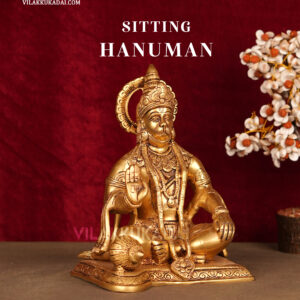
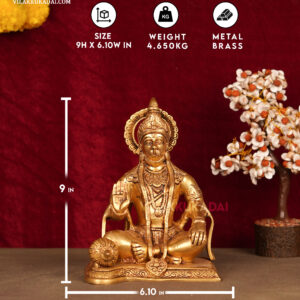
Antique Hanuman Brass Idol / Anjaneyar Statue / Bajrang Bali Murti
Highlights:
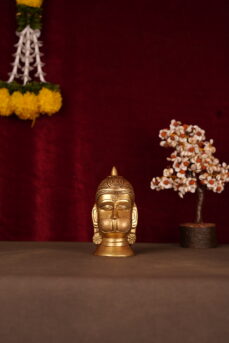
HANUMAN
- “Hanuman” translates to “one with a prominent jaw“ or “one with a disfigured jaw.” It is the name of a monkey god in Hindu mythology, known for his devotion to Lord Rama and his powerful attributes.
- The name “Hanuman” derives from the Sanskrit word “hanu,” meaning “jaw,” and “man,” meaning “prominent” or “disfigured”.
- A popular legend suggests Hanuman received his name after being struck in the jaw by Indra, the king of the gods, for attempting to reach the sun, which he mistook for a fruit.
- Hanuman is a prominent figure in the Ramayana, the Hindu epic, where he aids Rama in rescuing his wife Sita from the king Ravana. He is revered for his unwavering devotion, strength, courage, and selfless service. He is also known by names like Maruti (childhood name), Anjaneya, and Bajrangbali.
₹13,470 ₹15,500
13% Off
Out Of Stock


ANTIQUE LEAF GANESH
Highlights:
Ganesha, the son of Lord Shiva and Devi Parvati is popularly worshipped under different names like Sumukha, Ekadanta, Kapila, Gajakarna, Lambodara, Vikath, Vidhnanashaka, Vinayaka, Dhumraketu, Ganadhayaksha, Bhalchandra and Gajanana.
The large elephant head of Lord Ganesha symbolizes wisdom, understanding, and a discriminating intellect that one must possess to attain perfection in life.
mooshak (mouse) also symbolizes uncontrolled desires and ego that can nibble all that is good and noble in a person.
₹7,390 ₹8,500
13% Off
Out Of Stock


Ayyappan Lightweight/ 4″/ Ayyappa Idol/ Brass Idol/ Iyyappan Statue/ Iyyappa
Highlights:
Lightweight Silver Finish Brass Ayyappan Idol
Seek divine blessings and spiritual strength with this beautifully crafted Ayyappan idol in lightweight silver finish brass. Lord Ayyappan symbolizes discipline, devotion, and inner balance, guiding devotees toward righteousness and self-control.
Intricately designed with traditional temple-style detailing, the idol reflects calm authority and sacred grace. The lightweight brass structure with an elegant silver finish enhances its divine presence while ensuring durability and ease of placement.
Perfect for pooja rooms and spiritual spaces, this idol inspires faith, strength, and positive energy in your home.
A sacred offering from Vilakkukadai.
₹1,630 ₹2,500
35% Off
Out Of Stock


Ayyappan Statue/ 3 “/ Brass Iyyappa Idol/ Ayyappa Swamy Statue/ Pooja Decor
Highlights:
Ayyappan (or Ayyappa) is a popular Hindu deity, especially in South India, known as the son of Lord Shiva and Lord Vishnu (in his female avatar, Mohini), symbolizing divine justice, asceticism, and interfaith unity, with his most famous shrine at Sabarimala, Kerala, attracting millions of pilgrims who undertake strict vows (Vratham) and chant “Swamiye Saranam Ayyappa“. He’s depicted as a celibate yogi, sometimes with a bell around his neck or riding a tiger, representing wisdom, strength, and dharma
Key Aspects of Ayyappan:
- Origin: Born from the union of Shiva and Vishnu’s Mohini form, earning him names like Hariharan Puthiran (Son of Hari and Haran).
- Symbolism: Embodies dharma (righteousness), compassion, and discipline, seen as a protector against evil.
₹650 ₹890
27% Off
Out Of Stock


Bala Murugan/ 6″/ Brass Kartikeya Statue/ Murugar Silai/ Subrahmanya
Highlights:
MURUGAR
- Lord Murugar is often depicted with a peacock as his vahanam (vehicle), symbolizing beauty, grace, and the conquest of ego and pride.
- The peacock also represents vision, royalty, spirituality, and spiritual awakening, guiding .
- Murugan as he battles against negativity.
- The peacock is known for its vibrant plumage and graceful movements, representing the beauty and grace that Murugan embodies.
- The peacock’s ability to control serpents, which are often associated with ego and pride.
- Symbolizes Murugan’s ability to subdue negative influences and guide towards spiritual awakening.
- The peacock’s piercing gaze is seen as a symbol of clarity and intuition, representing Murugan’s wisdom and ability to see beyond the surface.
- The peacock is also associated with royalty and spirituality, reflecting Murugan’s divine nature and his role as a celestial being.
- Murugan is seen as a divine guide, and his association with the peacock reinforces this message of spiritual awakening and enlightenment.
- Murugan, as a warrior god, is depicted with the peacock, highlighting his ability to overcome obstacles and protect the world.
₹1,850 ₹2,130
13% Off
Out Of Stock


BRAMMA
Highlights:
Brahma
Invoke divine wisdom and creation energy with the Brahma idol, a sacred representation of Lord Brahma, the creator in Hindu tradition and one of the Trimurti. Beautifully crafted with intricate traditional detailing, this spiritual piece symbolizes knowledge, creativity, and cosmic order. Ideal for pooja rooms, temples, or home altars, it adds a serene and powerful presence to any space while inspiring learning and positivity. Perfect for daily worship, spiritual décor, and gifting on auspicious occasions.
₹3,150 ₹3,630
13% Off
Out Of Stock


Brass Jula Krishna/ 4.5″/ Jhula Gopal Murti/ Jhoola Butter Krishnar/ Kanha Ji
Highlights:
Brass Jhula Krishna
The Brass Jhula Krishna is a beautifully crafted idol of Lord Krishna seated on a traditional swing (Jhula), symbolizing divine love, joy, prosperity, and spiritual bliss. Expertly handcrafted from brass with intricate detailing and a polished finish, this elegant piece reflects timeless artistry and devotional charm.
Perfect for pooja rooms, home temples, festive decor, and spiritual spaces, the Brass Jhula Krishna adds a graceful and auspicious touch to any setting. It is especially cherished during Janmashtami celebrations and makes a meaningful addition to any devotional collection.
₹1,380 ₹1,700
19% Off
Out Of Stock


Butter Krishna Idol/ 3″/ Brass Vennai Krishna/ Gopal Murti/ Kanha Ji
Highlights:
Krishna is a major deity in Hinduism. He is worshipped as the eighth avatar of Vishnu and also as the Supreme god in his own right.
He is the god of protection, compassion, tenderness, and love is one of the most popular and widely revered among Indian divinities.
Krishna’s birthday is celebrated every year by Hindus on Krishna Janmashtami according to the lunisolar Hindu calendar.
Within the Indian epic Mahabharata, Krishna was the son of the Yadava chief Vasudeva and his mother was Devaki. Hence he was known as Vāsudeva-Krishna or Vāsudeva.
₹2,150 ₹2,680
20% Off
Out Of Stock


Chakrathalwar/ 3.5″/ Sudarshana Idol/ Brass Idol/ Chakrathazhwar Idol/ Sudarshana Perumal
Highlights:
CHAKRATHALWAR
“Chakrathalwar” refers to the Sudarshana Chakra,
A divine weapon in Hinduism, specifically associated with Lord Vishnu.
It’s also the name of the embodiment of this weapon, sometimes referred to as Chakraperumal or Sudarshana Azhwar.
₹710 ₹890
20% Off
Out Of Stock


Dancing Ganesh Murti 01/ 5.5″/ Brass Ganpati Murti/ Vinayaka Idol/ Vinayagar Idol
Highlights:
NARTHANA(NRITYA) GANAPATHI
- The Sanskrit word ‘Nritya’ means ‘dance.
- ‘ Nritya Ganapati, as the name suggests, is a dancer or a happy dancer, and thus represents the relaxed and enjoyable form of the Lord.
- This Ganapati is depicted dancing under the divine, wish-fulfilling Kalpa Vriksha tree.
₹3,163 ₹3,795
17% Off
Out Of Stock


Dancing Ganesh Murti 02/ 5.5″/ Brass Ganpati Murti/ Vinayaka Idol/ Vinayagar Idol
Highlights:
NARTHANA(NRITYA) GANAPATHI
- The Sanskrit word ‘Nritya’ means ‘dance.
- ‘ Nritya Ganapati, as the name suggests, is a dancer or a happy dancer, and thus represents the relaxed and enjoyable form of the Lord.
- This Ganapati is depicted dancing under the divine, wish-fulfilling Kalpa Vriksha tree.
₹2,750 ₹3,300
17% Off
Out Of Stock


Dancing Ganesh Murti 03/ 5.5″/ Brass Ganpati Murti/ Vinayaka Idol/ Vinayagar Idol
Highlights:
NARTHANA(NRITYA) GANAPATHI
- The Sanskrit word ‘Nritya’ means ‘dance.
- ‘ Nritya Ganapati, as the name suggests, is a dancer or a happy dancer, and thus represents the relaxed and enjoyable form of the Lord.
- This Ganapati is depicted dancing under the divine, wish-fulfilling Kalpa Vriksha tree.
₹3,163 ₹3,795
17% Off
Out Of Stock


Dancing Ganesh Murti 04/ 5.5″/ Brass Ganpati Murti/ Vinayaka Idol/ Vinayagar Idol
Highlights:
NARTHANA(NRITYA) GANAPATHI
- The Sanskrit word ‘Nritya’ means ‘dance.
- ‘ Nritya Ganapati, as the name suggests, is a dancer or a happy dancer, and thus represents the relaxed and enjoyable form of the Lord.
- This Ganapati is depicted dancing under the divine, wish-fulfilling Kalpa Vriksha tree.
₹3,163 ₹3,795
17% Off
Out Of Stock


Dattatreya Idol/ 5″/ Dhathathreyar/ Datta Murti/ Brass Idol
Highlights:
Dattatreyar
Bring divine wisdom and spiritual balance into your home with the Dattatreyar idol, a sacred representation of Lord Dattatreya, the combined form of Brahma, Vishnu, and Shiva. Beautifully crafted with intricate traditional detailing, this spiritual piece symbolizes knowledge, detachment, and enlightenment. Ideal for pooja rooms, meditation spaces, and home altars, it creates a serene and uplifting atmosphere, making it perfect for daily worship, spiritual practice, and meaningful gifting.
₹2,880 ₹3,320
13% Off
Out Of Stock


Dhakshinamoorthy/ 4.5″/ Dakshinamurthy Vigraham/ Dakshinamurti/ Brass Idol
Highlights:
Vishnu, also known as Narayana and Hari, is one of the principal deities of Hinduism. He is the supreme being within Vaishnavism, one of the major traditions within contemporary Hinduism.
Vishnu is known as “The Preserver” within the Trimurti, the triple deity of supreme divinity that includes Brahma and Shiva. In Vaishnavism, Vishnu is the supreme being who creates, protects, and transforms the universe.
Whenever the world is threatened with evil, chaos, and destructive forces, Vishnu descends in the form of an avatar (incarnation) to restore the cosmic order, and protect dharma.
₹1,730 ₹1,990
13% Off
Out Of Stock


Dhanvanthiri/ 12″/ Dhanvantari Murti/ Brass Idol/ Dhanvantri Murti/ Dhanwantari Statue
Highlights:
DHANVANTARI
Dhanvantari is the god of Ayurvedic medicine or the divine physician.
He is also known as the god of healing and health.
In Hindu mythology, Dhanvantari is considered an avatar of Vishnu and is revered as the divine healer who brought the knowledge of Ayurveda to humanity.
₹8,380 ₹9,640
13% Off
Out Of Stock


Dhanvanthri 4.5″
Highlights:
DHANVANTARI
Dhanvantari is the god of Ayurvedic medicine or the divine physician.
He is also known as the god of healing and health.
In Hindu mythology, Dhanvantari is considered an avatar of Vishnu and is revered as the divine healer who brought the knowledge of Ayurveda to humanity
₹1,750 ₹2,190
20% Off
Out Of Stock


Flute Krishna Miniature/ 4.5″/ Krishnar Idol/ Brass Idol/ Gopal Murti/ Kanha Ji
Highlights:
KRISHNA WITH FLUTE
God Krishna with a flute symbolizes divine music, spiritual devotion, and the enchanting qualities of Krishna.
It represents a connection to spirituality, love for music, and a desire for inner peace.
The flute is also a powerful symbol of love and devotion, capturing the essence of divine music that resonates with the hear, Krishna’s flute is often associated with the divine sound of the universe, representing the vibrations of spiritual awakening
₹890 ₹1,070
17% Off
Out Of Stock


Ganesh Murti/ 5 “/ Brass Vinayagar Idol/ Light Weight Ganpati Murti/ Home Decor
Highlights:
?️ Ganesh Brass Idol – Lord of Wisdom and New Beginnings
Invite divine blessings, prosperity, and success into your home with this exquisitely handcrafted Ganesh Brass Idol from Vilakku Kadai. Lord Ganesh, the remover of obstacles and harbinger of good fortune, is revered as the deity of intellect, wisdom, and auspicious beginnings.
Each idol is made from premium-quality brass by skilled South Indian artisans, featuring intricate detailing and a radiant Silver finish. Placing Lord Ganesh in your home or workspace attracts positivity, peace, and prosperity while removing all barriers to success.
Whether for daily worship, festive décor, or as a thoughtful gift, this sacred idol adds divine energy and traditional charm to any space.
✨ Features & Benefits
-
? Handcrafted from solid brass with intricate detailing
-
? Symbol of wisdom, prosperity, and protection
-
? Ideal for pooja rooms, temples, or offices
-
? Perfect gift for housewarmings, weddings, and festivals
₹2,970 ₹3,500
15% Off
Out Of Stock


Ganesh Murti/ 5 “/ Light Weight Vinayagar Idol/ Brass Ganpati Murti/ Home Decor
Highlights:
Ganesh Murti – Sacred Symbol of Wisdom and Prosperity
Bring divine blessings into your home with this beautifully crafted Ganesh Murti, featuring the graceful form of Ganesha, the remover of obstacles and the symbol of wisdom and success. Designed with intricate detailing and an elegant finish, this sacred idol creates a peaceful and spiritually uplifting atmosphere in puja rooms, home temples, offices, and living spaces. Combining traditional artistry with devotional significance, it makes a meaningful addition to your home decor and a thoughtful gift for special occasions.
₹3,000 ₹3,500
14% Off
Out Of Stock


GANESH ON LOTUS
Highlights:
Ganesha, the son of Lord Shiva and Devi Parvati is popularly worshipped under different names like Sumukha, Ekadanta, Kapila, Gajakarna, Lambodara, Vikath, Vidhnanashaka, Vinayaka, Dhumraketu, Ganadhayaksha, Bhalchandra and Gajanana.
The large elephant head of Lord Ganesha symbolizes wisdom, understanding, and a discriminating intellect that one must possess to attain perfection in life.
mooshak (mouse) also symbolizes uncontrolled desires and ego that can nibble all that is good and noble in a person.
₹5,420 ₹6,240
13% Off
Out Of Stock


GANESH WITH STAND
Highlights:
Ganesha, the son of Lord Shiva and Devi Parvati is popularly worshipped under different names like Sumukha, Ekadanta, Kapila, Gajakarna, Lambodara, Vikath, Vidhnanashaka, Vinayaka, Dhumraketu, Ganadhayaksha, Bhalchandra and Gajanana.
The large elephant head of Lord Ganesha symbolizes wisdom, understanding, and a discriminating intellect that one must possess to attain perfection in life.
mooshak (mouse) also symbolizes uncontrolled desires and ego that can nibble all that is good and noble in a person.
₹5,920 ₹6,810
13% Off
Out Of Stock


GANESH WITH THIRUVACHI 6″
Highlights:
Ganesha, the son of Lord Shiva and Devi Parvati is popularly worshipped under different names like Sumukha, Ekadanta, Kapila, Gajakarna, Lambodara, Vikath, Vidhnanashaka, Vinayaka, Dhumraketu, Ganadhayaksha, Bhalchandra and Gajanana.
The large elephant head of Lord Ganesha symbolizes wisdom, understanding, and a discriminating intellect that one must possess to attain perfection in life.
mooshak (mouse) also symbolizes uncontrolled desires and ego that can nibble all that is good and noble in a person.
₹4,500 ₹5,180
13% Off
Out Of Stock


Hanuman Murti/ 4.5″/ Anjaneyar/ Brass Idol/ Bajrang Bali Idol/ Pooja Mandir
Highlights:
HANUMAN MURTI
- “Hanuman” translates to “one with a prominent jaw“ or “one with a disfigured jaw.” It is the name of a monkey god in Hindu mythology, known for his devotion to Lord Rama and his powerful attributes.
- The name “Hanuman” derives from the Sanskrit word “hanu,” meaning “jaw,” and “man,” meaning “prominent” or “disfigured”.
- A popular legend suggests Hanuman received his name after being struck in the jaw by Indra, the king of the gods, for attempting to reach the sun, which he mistook for a fruit.
- Hanuman is a prominent figure in the Ramayana, the Hindu epic, where he aids Rama in rescuing his wife Sita from the king Ravana. He is revered for his unwavering devotion, strength, courage, and selfless service. He is also known by names like Maruti (childhood name), Anjaneya, and Bajrangbali.
₹1,890 ₹2,350
20% Off
Out Of Stock


Hanuman Statue/ 2.5″/ Anjaneya Statue/ Bajrang Bali Idol/ Brass Idol
Highlights:
HANUMAN
- “Hanuman” translates to “one with a prominent jaw“ or “one with a disfigured jaw.” It is the name of a monkey god in Hindu mythology, known for his devotion to Lord Rama and his powerful attributes.
- The name “Hanuman” derives from the Sanskrit word “hanu,” meaning “jaw,” and “man,” meaning “prominent” or “disfigured”.
- A popular legend suggests Hanuman received his name after being struck in the jaw by Indra, the king of the gods, for attempting to reach the sun, which he mistook for a fruit.
- Hanuman is a prominent figure in the Ramayana, the Hindu epic, where he aids Rama in rescuing his wife Sita from the king Ravana. He is revered for his unwavering devotion, strength, courage, and selfless service. He is also known by names like Maruti (childhood name), Anjaneya, and Bajrangbali.
₹990 ₹1,100
10% Off
Out Of Stock


Hanuman Statue/ 4 X 3″/ Brass Idol/ Anjaneya Statue/ Hanuman Ji/ Pooja Decor
Highlights:
HANUMAN STATUE
- “Hanuman” translates to “one with a prominent jaw“ or “one with a disfigured jaw.” It is the name of a monkey god in Hindu mythology, known for his devotion to Lord Rama and his powerful attributes.
- The name “Hanuman” derives from the Sanskrit word “hanu,” meaning “jaw,” and “man,” meaning “prominent” or “disfigured”.
- A popular legend suggests Hanuman received his name after being struck in the jaw by Indra, the king of the gods, for attempting to reach the sun, which he mistook for a fruit.
- Hanuman is a prominent figure in the Ramayana, the Hindu epic, where he aids Rama in rescuing his wife Sita from the king Ravana. He is revered for his unwavering devotion, strength, courage, and selfless service. He is also known by names like Maruti (childhood name), Anjaneya, and Bajrangbali.
₹2,090 ₹2,640
21% Off
Out Of Stock


Kala Bairavar/ 11″/ Brass Kaala Bairavar/ Kala Bhairava Statue/ Kaal Bhairav Statue
Highlights:
KAALA BHIRAVAR
- Kaal Bhairav is a manifestation of Shiva’s fierce and powerful form, representing the destroyer of time and the cosmos.
- “Kaal” refers to time, and “Bhairav” means fearsome or terrible. He is considered the master of time, capable of destroying even time itself. He is seen as a guardian and protector, particularly of temples and cities, and is believed to protect devotees from negative energies, evil spirits, and black magic.
- Kaal Bhairav is associated with the destruction of negativity, ignorance, and fear. He is believed to help individuals overcome their inner demons and negative emotions.
- Symbol of Transformation:Kaal Bhairav is a symbol of transformation, representing the constant cycle of creation, preservation, and destruction.
- In essence, Kaal Bhairav is a deity associated with time, destruction, and transformation, embodying the powerful and often fearsome aspect of Shiva’s nature.
₹7,320 ₹8,420
13% Off
Out Of Stock


KALINGA NARTHANA GANAPATHY (Vinayagar)
Highlights:
NARTHANA(NRITYA) GANAPATHI
- The Sanskrit word ‘Nritya’ means ‘dance.
- ‘ Nritya Ganapati, as the name suggests, is a dancer or a happy dancer, and thus represents the relaxed and enjoyable form of the Lord.
- This Ganapati is depicted dancing under the divine, wish-fulfilling Kalpa Vriksha tree.
₹8,890 ₹10,224
13% Off
Out Of Stock


Krishna 8″
Highlights:
KRISHNA WITH FLUTE
- God Krishna with a flute symbolizes divine music, spiritual devotion, and the enchanting qualities of Krishna.
- It represents a connection to spirituality, love for music, and a desire for inner peace.
- The flute is also a powerful symbol of love and devotion, capturing the essence of divine music that resonates with the hear, Krishna’s flute is often associated with the divine sound of the universe, representing the vibrations of spiritual awakening
₹2,750 ₹3,150
13% Off
Out Of Stock


Krishna Murti/ 6″/ Gopal Murti/ Brass Idol/ Kanha Ji/ Krishna Statue
Highlights:
KRISHNA WITH FLUTE
- God Krishna with a flute symbolizes divine music, spiritual devotion, and the enchanting qualities of Krishna.
- It represents a connection to spirituality, love for music, and a desire for inner peace.
- The flute is also a powerful symbol of love and devotion, capturing the essence of divine music that resonates with the hear, Krishna’s flute is often associated with the divine sound of the universe, representing the vibrations of spiritual awakening
₹1,710 ₹2,060
17% Off
Out Of Stock


Krishna Murti/ 7.5″/ Laddu Gopal Murti/ Brass Idol/ Krishnar/ Kanha Ji
Highlights:
Krishna is a major deity in Hinduism. He is worshipped as the eighth avatar of Vishnu and also as the Supreme god in his own right.
He is the god of protection, compassion, tenderness, and love is one of the most popular and widely revered among Indian divinities.
Krishna’s birthday is celebrated every year by Hindus on Krishna Janmashtami according to the lunisolar Hindu calendar.
Within the Indian epic Mahabharata, Krishna was the son of the Yadava chief Vasudeva and his mother was Devaki. Hence he was known as Vāsudeva-Krishna or Vāsudeva.
₹5,790 ₹6,950
17% Off
Out Of Stock

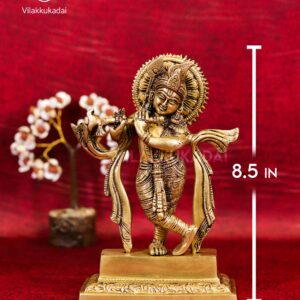
Krishnar 8.5″
Highlights:
KRISHNA WITH FLUTE
- God Krishna with a flute symbolizes divine music, spiritual devotion, and the enchanting qualities of Krishna.
- It represents a connection to spirituality, love for music, and a desire for inner peace.
- The flute is also a powerful symbol of love and devotion, capturing the essence of divine music that resonates with the hear, Krishna’s flute is often associated with the divine sound of the universe, representing the vibrations of spiritual awakening
₹5,050 ₹5,810
13% Off
Out Of Stock


Kuberan Idol/ 3″/ Kuber Statue/ Brass Idol/ Kubera Idol/ Home Decor
Highlights:
KUBERAN
- Kubera, a significant deity in Hinduism, often translated as Lord of Wealth or God of Wealth. He is also known as Kuvera or Kuberan.
- Kubera is revered as the guardian of treasures and riches, and is also the King of the Yakshas.
- Kubera is the god of wealth: He is believed to be the custodian of all earthly treasures, including precious stones and metals. He is the King of the Yakshas,Yakshas are semi-divine beings, and Kubera is their leader.
- Kubera is the guardian of the north. He is associated with prosperity.
- Kubera’s influence extends to both material wealth and spiritual abundance.
₹1,350 ₹1,650
18% Off
Out Of Stock


Kuberan with Mongoose/ 5″/ Kuber Statue/ Brass Idol/ Kubera Statue/ Divine Idol
Highlights:
KUBERAN
- Kubera, a significant deity in Hinduism, often translated as Lord of Wealth or God of Wealth. He is also known as Kuvera or Kuberan.
- Kubera is revered as the guardian of treasures and riches, and is also the King of the Yakshas.
- Kubera is the god of wealth: He is believed to be the custodian of all earthly treasures, including precious stones and metals. He is the King of the Yakshas,Yakshas are semi-divine beings, and Kubera is their leader.
- Kubera is the guardian of the north. He is associated with prosperity.
- Kubera’s influence extends to both material wealth and spiritual abundance.
₹4,150 ₹4,980
17% Off
Out Of Stock


Kuberar/ 2″/ Kuber Statue/ Brass Idol/ Kubera Statue/ Kuberan Idol/ Pooja Decor
Highlights:
KUBERAN
- Kubera, a significant deity in Hinduism, often translated as Lord of Wealth or God of Wealth. He is also known as Kuvera or Kuberan.
- Kubera is revered as the guardian of treasures and riches, and is also the King of the Yakshas.
- Kubera is the god of wealth: He is believed to be the custodian of all earthly treasures, including precious stones and metals. He is the King of the Yakshas,Yakshas are semi-divine beings, and Kubera is their leader.
- Kubera is the guardian of the north. He is associated with prosperity.
- Kubera’s influence extends to both material wealth and spiritual abundance.
₹730 ₹870
16% Off
Out Of Stock


Kudai Ganesh Murti/ 3 “/ Umbrella Vinayaka/ Light Weight Brass Idol/ Pooja Decor
Highlights:
Ganesha, the son of Lord Shiva and Devi Parvati is popularly worshipped under different names like Sumukha, Ekadanta, Kapila, Gajakarna, Lambodara, Vikath, Vidhananashaka, Vinayaka, Dhumraketu, Ganadhayaksha, Bhalchandra and Gajanana.
The large elephant head of Lord Ganesha symbolizes wisdom, understanding, and a discriminating intellect that one must possess to attain perfection in life.
mooshak (mouse) also symbolizes uncontrolled desires and ego that can nibble all that is good and noble in a person.
₹840 ₹1,300
35% Off
Out Of Stock


Laddu Krishna Murti/ 3.5″/ Laddu Gopal Murti/ Kanha Ji/ Krishnar/ Brass Idol
Highlights:
Krishna is a major deity in Hinduism. He is worshipped as the eighth avatar of Vishnu and also as the Supreme god in his own right.
He is the god of protection, compassion, tenderness, and love is one of the most popular and widely revered among Indian divinities.
Krishna’s birthday is celebrated every year by Hindus on Krishna Janmashtami according to the lunisolar Hindu calendar.
Within the Indian epic Mahabharata, Krishna was the son of the Yadava chief Vasudeva and his mother was Devaki. Hence he was known as Vāsudeva-Krishna or Vāsudeva.
₹1,080 ₹1,500
28% Off
Out Of Stock


Lakshmi Hayagrivar/ 3″/ Lakshmi Hayagreevar Idol/ Laxmi Hayagreeva/ Brass Idol
Highlights:
HAYAGRIVA
- “Lakshmi Hayagriva” represents the divine form where the goddess of prosperity is united with the GOD OF KNOWLEDGE , symbolizing the blessings of both material wealth and wisdom.
- “Hayagriva” is a name of an avatar of Vishnu, depicted with a horse’s head. The name comes from “Haya” (horse) and “Griva” (neck), literally meaning “one with a horse’s neck”.
- Hayagriva is revered as the god of knowledge and wisdom, often invoked for academic success and intellectual clarity.
- Goddess Lakshmi is known as the goddess of wealth, prosperity, beauty, and good fortune. She is often associated with auspiciousness and abundance.
- When Lakshmi is depicted alongside Hayagriva, it symbolizes the combination of prosperity and knowledge, representing the blessings of both worldly success and wisdom.
₹1,570 ₹1,810
13% Off
Out Of Stock


Lakshmi Kuberan/ 5″/ Brass Idol/ Laxmi Kuberar/ Pooja Decor/ Divine Idol
Highlights:
Kuberan is the god of wealth.
He is regarded as the regent of the north, and a protector of the world and also the owner of the treasures of the world.
He is associated with the earth, mountains, all treasures such as minerals and jewels that lie underground, and riches in genera
₹1,950 ₹2,250
13% Off
Out Of Stock


Lakshmi Narasimhar Idol With Sheshnag/ 4″/ Brass Lakshmi Narasimar/ Laxmi Narasimhar
Highlights:
Lakshmi Narasimhar Idol – Divine Protection and Prosperity
Invite divine blessings into your home with this beautifully crafted Lakshmi Narasimhar Idol, featuring the sacred form of Narasimha with Goddess Lakshmi. Symbolizing protection, courage, and prosperity, this sacred idol creates a powerful yet peaceful presence in puja rooms, home temples, and spiritual spaces. Designed with intricate detailing and an elegant finish, it combines devotional significance with timeless craftsmanship, making it a meaningful addition to your sacred decor.
₹1,310 ₹1,500
13% Off
Out Of Stock


Madurai Veeran/ 6″/ Brass Karuppu Samy/ Karuppasamy Statue/ Kaval Deivam/ Brass Idol
Highlights:
Karuppasamy is typically depicted as a tall, dark-complexioned figure with a thick mustache. He is often shown carrying a sword and other weapons, riding a white or black horse or a buffalo, which symbolizes his warrior-like nature.
As a guardian and village deity (kaval deivam), he is seen as a champion of justice and a swift enforcer of righteousness. His name is derived from the Tamil words Karuppu (black) and Samy (God), alluding to his dark complexion.
₹1,730 ₹2,080
17% Off
Out Of Stock


Maha Vishnu Murti/ 10.5″/ Balaji Statue/ Perumal Statue/ Venkateswara Statue
Highlights:
MAHA VISHNU
- “Maha Vishnu” refers to the supreme form of Vishnu.
- The preserver in the Hindu Trinity, who is considered the absolute, unmanifested, and ultimate source of all other Vishnu forms.
- Mahavishnu is beyond human comprehension and attributes, often described as the form of the Almighty Supreme Personality of Godhead.
₹5,580 ₹6,420
13% Off
Out Of Stock


Murugan 3″(Miniature))
Highlights:
MURUGAR
- Lord Murugar is often depicted with a peacock as his vahanam (vehicle), symbolizing beauty, grace, and the conquest of ego and pride.
- The peacock also represents vision, royalty, spirituality, and spiritual awakening, guiding .
- Murugan as he battles against negativity.
- The peacock is known for its vibrant plumage and graceful movements, representing the beauty and grace that Murugan embodies.
- The peacock’s ability to control serpents, which are often associated with ego and pride.
- Symbolizes Murugan’s ability to subdue negative influences and guide towards spiritual awakening.
- The peacock’s piercing gaze is seen as a symbol of clarity and intuition, representing Murugan’s wisdom and ability to see beyond the surface.
- The peacock is also associated with royalty and spirituality, reflecting Murugan’s divine nature and his role as a celestial being.
- Murugan is seen as a divine guide, and his association with the peacock reinforces this message of spiritual awakening and enlightenment.
- Murugan, as a warrior god, is depicted with the peacock, highlighting his ability to overcome obstacles and protect the world.
₹800 ₹920
13% Off
Out Of Stock


Murugan 5″
Highlights:
Muruga, also known as Subramanya, Karthikeya, Shanmuga or Skanda, is the son of Lord Shiva and his consort, Goddess Parvati. He is a unique Godhead, who is a rare combination of matchless valor and supreme, divine intelligence. He remains as the core of all the divine energies and is believed to lead one towards spiritual evolution. Muruga is regarded as a Tamil God and is widely worshipped all over the state.
₹1,410 ₹1,695
17% Off
Out Of Stock


Murugan Valli Deivanai Statue 19″
Highlights:
Murugar or Kandhan is the Tamil God of war and victory.
Murugar, considered as the son of Shiva and Parvathi.
Murugar is considered the God of Tamil language and he is mentioned a lot in Sangam literature.
Murugar has six shrines in Tamil Nadu, which are known as Arupadaiveedu.
The six abodes of Karthikeya are all in Tamil Nadu.
The six sites (padaiveedu) in Tamil Nadu where Murugar sojourned while leading his armies are Palani, Swamimalai, Thiruparamkundram, Pazhamudirsolai, Thiruthani and Thiruchendur, the Arupadaiveedu.
₹39,820 ₹47,790
17% Off
Out Of Stock


Musical Vinayagar Idol/ 6″/ Ganapathi Idol/ Brass Ganesh Murti/ Ganapathy/ Vinayaka Idol
Highlights:
Ganesha, the son of Lord Shiva and Devi Parvati is popularly worshipped under different names like Sumukha, Ekadanta, Kapila, Gajakarna, Lambodara, Vikath, Vidhananashaka, Vinayaka, Dhumraketu, Ganadhayaksha, Bhalchandra and Gajanana.
The large elephant head of Lord Ganesha symbolizes wisdom, understanding, and a discriminating intellect that one must possess to attain perfection in life.
mooshak (mouse) also symbolizes uncontrolled desires and ego that can nibble all that is good and noble in a person.
₹2,933 ₹3,623
19% Off
Out Of Stock


Musical Vinayagar Idol/ 6″/ Ganapathi Idol/ Brass Ganesh Murti/ Vinayaka Idol/ Ganapathy
Highlights:
Ganesha, the son of Lord Shiva and Devi Parvati is popularly worshipped under different names like Sumukha, Ekadanta, Kapila, Gajakarna, Lambodara, Vikath, Vidhananashaka, Vinayaka, Dhumraketu, Ganadhayaksha, Bhalchandra and Gajanana.
The large elephant head of Lord Ganesha symbolizes wisdom, understanding, and a discriminating intellect that one must possess to attain perfection in life.
mooshak (mouse) also symbolizes uncontrolled desires and ego that can nibble all that is good and noble in a person.
₹2,900 ₹3,150
8% Off
Out Of Stock


NAGA VISHNU 3.5″
Highlights:
Vishnu, also known as Narayana and Hari, is one of the principal deities of Hinduism. He is the supreme being within Vaishnavism, one of the major traditions within contemporary Hinduism.
Vishnu is known as “The Preserver” within the Trimurti, the triple deity of supreme divinity that includes Brahma and Shiva. In Vaishnavism, Vishnu is the supreme being who creates, protects, and transforms the universe.
Whenever the world is threatened with evil, chaos, and destructive forces, Vishnu descends in the form of an avatar (incarnation) to restore the cosmic order, and protect dharma.
₹870 ₹1,050
17% Off
Out Of Stock


Naga Vishnu Murti/ 4″/ Balaji Murti/ Brass Idol/ Perumal Statue/ Venkatachalapathy
Highlights:
This hand-crafted piece may have slight irregularities and imperfections which only add to the unique charm of the product.
This product is crafted from brass that is considered to be a sacred metal and traditionally used in prayer accessories.
SHIPPING INFO:
Dispatched in a maximum of 7-10 business days. This item is not eligible for return. Cancellation requests will be accepted strictly within 24 hours of placing the order only. This product is made on order.
For ordering out of India please Contact us in Whatsapp. Website shipment only within India
₹2,050 ₹3,150
35% Off
Out Of Stock


Nandhi Statue/ 11″/ Nandi Statue/ Nandi Bull Idol/ Brass Idol
Highlights:
Nandi also known as Nandikeshwara or Nandideva, is the bull vahana of the Hindu god Shiva. He is also the guardian deity of Kailash, the abode of Shiva.
Nandi has the meaning of happy, joy, and satisfaction, the properties of divine guardian of Shiva- Nandi.
A lingam, sometimes referred to as linga or Shiva linga, is an abstract or aniconic representation of the Hindu god Shiva in Shaivism. It is typically the primary murti or devotional image in Hindu temples dedicated to Shiva, also found in smaller shrines, or as self-manifested natural objects.
Lingam is regarded as the “outward symbol” of the “formless Reality”, the symbolization of merging of the ‘primordial matter’ with the ‘pure consciousness in transcendental context.
₹15,300 ₹18,360
17% Off
Out Of Stock


Nandhi Statue/ 3.5″/ Brass Idol/ Nandi Statue/ Nandi Bull Idol/ Pooja Decor
Highlights:
Nandhi
Bring sacred strength and devotion into your space with the Nandhi idol, a beautifully crafted representation of Lord Shiva’s divine vehicle and devoted guardian. Symbolizing faith, patience, and protection, Nandhi holds a powerful spiritual significance in Hindu tradition. This finely detailed piece is perfect for pooja rooms, temples, or home decor, adding a serene and auspicious presence. Ideal for daily worship or gifting, it reflects deep devotion and traditional elegance.
₹2,820 ₹3,250
13% Off
Out Of Stock


Nandhikeshwara/ 8″/ Nandikeshvara/ Nandi/ Brass Idol
Highlights:
The Hindu God Shiva was originally known as Rudra, a minor deity addressed only three times in the Rig Veda. Shiva is known as “The Destroyer” within the Trimurti, the Hindu trinity which also includes Brahma and Vishnu. In the Shaivite tradition, Shiva is the Supreme Lord who creates, protects and transforms the universe.
Shiva is known by many names such as Viswanatha (lord of the universe), Mahadeva, Mahandeo, Mahasu, Mahesha, Maheshvara, Shankara, Shambhu, Rudra, Hara, Trilochana, Devendra (chief of the gods), Neelakanta, Subhankara, Trilokinatha (lord of the three realms), and Ghrneshwar (lord of compassion).
₹8,020 ₹9,630
17% Off
Out Of Stock


Nandi Statue/ 1″/ Brass Idol/ Nandhi Statue/ Nandi Murti/ Home Decor
Highlights:
Nandi also known as Nandikeshwara or Nandideva, is the bull vahana of the Hindu god Shiva. He is also the guardian deity of Kailash, the abode of Shiva.
Nandi has the meaning of happy, joy, and satisfaction, the properties of divine guardian of Shiva- Nandi.
A lingam, sometimes referred to as linga or Shiva linga, is an abstract or aniconic representation of the Hindu god Shiva in Shaivism. It is typically the primary murti or devotional image in Hindu temples dedicated to Shiva, also found in smaller shrines, or as self-manifested natural objects.
Lingam is regarded as the “outward symbol” of the “formless Reality”, the symbolization of merging of the ‘primordial matter’ with the ‘pure consciousness in transcendental context.
₹300 ₹650
54% Off
Out Of Stock


Nandi Statue/ 2″/ Brass Idol/ Nandhi Statue/ Nandi Murti/ Pooja Mandir
Highlights:
Nandi also known as Nandikeshwara or Nandideva, is the bull vahana of the Hindu god Shiva. He is also the guardian deity of Kailash, the abode of Shiva.
Nandi has the meaning of happy, joy, and satisfaction, the properties of divine guardian of Shiva- Nandi.
A lingam, sometimes referred to as linga or Shiva linga, is an abstract or aniconic representation of the Hindu god Shiva in Shaivism. It is typically the primary murti or devotional image in Hindu temples dedicated to Shiva, also found in smaller shrines, or as self-manifested natural objects.
Lingam is regarded as the “outward symbol” of the “formless Reality”, the symbolization of merging of the ‘primordial matter’ with the ‘pure consciousness in transcendental context.
₹840 ₹1,150
27% Off
Out Of Stock


Natarajar/ 12″/ Natraj Statue/ Brass Idol/ Natraja Murti/ Shiva Nataraja
Highlights:
Nataraja is a depiction of the Hindu god Shiva as the divine cosmic dancer. His dance is called Tandava.The pose and artwork are described in many Hindu texts such as the Tevaram, Thiruvasagam in Tamil.
He is commonly referred as Koothan( கூத்தன்), Sabesan( சபேசன்) and Ambalavanan (அம்பலவாணன்) in various Tamil texts.
The sculpture is symbolic of Shiva as the lord of dance and dramatic arts, with its style and proportions made according to Hindu texts on arts. Tamil Devotional texts such as Tirumurai (The twelve books of Southern Shaivism) speaks that Nataraja is the form of Shiva in which he does Creation, destruction, Preserving, Maya and Blessing.Thus Nataraja is considered one of the highest forms of Shiva.
₹10,850 ₹12,150
11% Off
Out Of Stock


Pandurangan Rukmani Set/ 5″/ Brass Vitthal Rukmini Murti/ Vithoba Rukmini
Highlights:
Pandurangan Rukmani
Bring divine love, devotion, and prosperity into your home with the Pandurangan Rukmani idol, a sacred representation of Lord Vithoba (Panduranga) and Goddess Rukmini. Beautifully crafted with intricate traditional detailing, this spiritual piece symbolizes compassion, harmony, and unwavering devotion. Ideal for pooja rooms, home altars, and temples, it creates a serene and auspicious atmosphere while adding a deeply devotional presence. Perfect for daily worship, festive occasions, and gifting on religious celebrations.
₹2,430 ₹2,920
17% Off
Out Of Stock


Pandurangan Rukmani/ 2.5″/ Vitthal Rukmini Murti/ Vitthal Rakhumai Murti/ Brass Idol
Highlights:
Vishnu, also known as Narayana and Hari, is one of the principal deities of Hinduism. He is the supreme being within Vaishnavism, one of the major traditions within contemporary Hinduism.
Vishnu is known as “The Preserver” within the Trimurti, the triple deity of supreme divinity that includes Brahma and Shiva. In Vaishnavism, Vishnu is the supreme being who creates, protects, and transforms the universe.
Whenever the world is threatened with evil, chaos, and destructive forces, Vishnu descends in the form of an avatar (incarnation) to restore the cosmic order, and protect dharma.
₹580 ₹700
17% Off
Out Of Stock


Peacock Murugan Statue/ 6″/ Brass Idol/ Kartikeya Statue/ Murugar/ Puja Mandir
Highlights:
Muruga, also known as Subramanya, Karthikeya, Shanmuga or Skanda, is the son of Lord Shiva and his consort, Goddess Parvati. He is a unique Godhead, who is a rare combination of matchless valor and supreme, divine intelligence. He remains as the core of all the divine energies and is believed to lead one towards spiritual evolution. Muruga is regarded as a Tamil God and is widely worshipped all over the state.
₹3,600 ₹3,950
9% Off
Out Of Stock


Perumal 4″
Highlights:
Perumal or Tirumal is a Hindu deity. Perumal is worshipped mainly among Tamil Hindus in South India, Sri Lanka, and the Tamil diaspor
a, who consider Perumal to be a form of Vishnu. Perumal. God of Vaikuntha.
₹815 ₹980
17% Off
Out Of Stock


Perumal Balaji Murti/ 11X4″/ Brass Idol/ Venkateswara/Perumal/Vishnu/ Puja Decor
Highlights:
Perumal Balaji Murti
- “Maha Vishnu” refers to the supreme form of Vishnu.
- The preserver in the Hindu Trinity, who is considered the absolute, unmanifested, and ultimate source of all other Vishnu forms.
- Mahavishnu is beyond human comprehension and attributes, often described as the form of the Almighty Supreme Personality of Godhead.
₹5,250 ₹6,150
15% Off
Product categories
- “Swamiye Saranam Ayyappa "– Mandala Pooja Special Collection (29)
- 2026 - வைகாசி விசாகம் - Vaikasi Visakam (132)
- Accessories (227)
- Gomathy Chakram (7)
- Karungali (34)
- Metal Cleaner (1)
- Panchalogam Kappu (36)
- Panchalogam Pendant (139)
- Ruthratcham (7)
- Ashada Navratri (85)
- Ganesh Collections (255)
- Hanuman Collection (73)
- Home Decor (433)
- Decorative bell (17)
- Decorative Idols (29)
- Toy Cart (13)
- Decorative Jula (24)
- Decorative lamps (Vilakku) (41)
- Decorative locks (9)
- Decorative Thiruvachi Peedam and Mandapam (12)
- Door Knocker (4)
- Flower Vase (1)
- Hanging Lamps (15)
- Jewel box (1)
- Pallankuli (2)
- Urli (55)
- Decorative urli (39)
- Plain Urli (9)
- Prasadha Urli (7)
- Wall Mount (194)
- Wall Hanging (180)
- Wall Hanging Vilakku (9)
- Wall Mount Brackets (7)
- Idols (1816)
- Birds And Animals (88)
- Brass God Idols (715)
- Ayyapan (17)
- Chakrathalwar (5)
- Christian idols (3)
- Dasavatharam Set (6)
- Dhanvanthiri (9)
- Guruvayurappan (4)
- Hanuman and Garudan (44)
- Krishna (99)
- Kuberan (11)
- Lakshmi Hayagrivar (7)
- Lakshmi Narashimhar (5)
- Lakshmi Varahar (2)
- Maduraiveeran & Karuppanasamy (4)
- Murugan (56)
- Natarajar (21)
- Other God Idols (3)
- Perumal (87)
- Ram parivar (13)
- Ramar (3)
- Ranganathar (5)
- Shivan [Siva] (101)
- Bairavar (7)
- Lingam and Nandi (42)
- Varahar (1)
- Vinayagar (212)
- Brass Goddess Idols (308)
- Andal (5)
- Angalamman (5)
- Annapoorani (25)
- Balambikai (8)
- Ganesha Lakshmi Saraswathi (19)
- Gayathri Devi (1)
- Jodi amman (2)
- Kaali (7)
- Kamatchi (12)
- Karumariamman (12)
- Kolkata kaali (3)
- Lakshmi (81)
- Maariamman (11)
- Meenakshi (8)
- Prathyangira devi (2)
- Rajamadhangi (3)
- Rajarajeshwari (11)
- Saraswathi (30)
- Simma Durgai (22)
- Sivagami (4)
- Tulja Bhavani Amman (5)
- Varahi (19)
- Vishnu durgai (1)
- Copper Idols (194)
- Copper Annapoorani (6)
- Copper Gomatha And KamaDenu (5)
- Copper Hanuman And Garudan Idol (14)
- Copper Krisna Idol (17)
- Copper Kuberan Idol (2)
- Copper Lakshmi idol (9)
- Copper Lakshmi Narasihmar idol (8)
- Copper Meenakshi Idol (3)
- Copper Mini Urli (4)
- Copper murugan idols (4)
- Copper Other God Idols (30)
- Copper Other Godess Idol (10)
- Copper Perumal (Vishnu) Idol (33)
- Copper Saraswathi Idol (5)
- Copper Shivan And Lingam Nandhi (16)
- Copper Varahar Idol (4)
- Copper Varahi Idol (7)
- Copper Vinayagar Idol (15)
- Devotional symbols (70)
- Mahameru (17)
- Perumal padham (6)
- Sangu (2)
- Sangu Chakra Namam stand (12)
- Thiri soolam (7)
- Vel (25)
- Emporium collection and Light Weight Idols (154)
- Guru and Motivational Leaders Idols (41)
- Aadhi Sankarar (1)
- Abdul Kalam (1)
- Buddha (16)
- Dattatreyar (1)
- kamarajar (1)
- Patanjali (1)
- Ragavendhar (3)
- Ramanujar (2)
- Sai Baba (7)
- Sivaji (2)
- Thiruvalluvar (1)
- Viveganandhar (1)
- Panchalogam (315)
- Panchalogam Agathiyar idol (6)
- Panchalogam Balambika idol (8)
- Panchalogam Durgai Idol (6)
- Panchalogam Gomatha And Kamadhenu Idol (5)
- Panchalogam Kamatchi Idol (10)
- Panchalogam Lakshmi Idol (11)
- Panchalogam Mahameru ,Vel ,Sulam (30)
- Panchalogam Mariamman (19)
- Panchalogam Meenakshi And Andal Idol (11)
- Panchalogam Miniature idol (46)
- Panchalogam Murugan Idol (50)
- Panchalogam Natarajar , Lingam And Nandhi Idol (37)
- panchalogam Other God Idol (47)
- panchalogam Other Godess Idol (23)
- Panchalogam perumal (4)
- Panchalogam Rajamathangi Idol (10)
- Panchalogam Rajarajeshwari (Lalithambikai) idol (6)
- Panchalogam Vinayagar Idol (21)
- Vaasthu Idols (84)
- Gomatha and Kamadhenu (38)
- Karpaga Virutcham (19)
- Laksmi Kubearar (10)
- Vaasthu Tortoise (11)
- Vaasthu Vilakku (5)
- Kitchen Products (126)
- Coffee Filter And Dabara Set (11)
- Glass (3)
- Kitchen Vessels (52)
- Frying Pan (2)
- Kudam (2)
- Masala Box (6)
- Other Produts (5)
- Padi (6)
- Plates And Thambulam (18)
- Pongal Paanai and Laddles (11)
- Prasadha Bowls (6)
- Spoon And Ladles ( karandi ) (11)
- Pooja Items (313)
- Agarbathi Stand (7)
- AMMAN DRESS (3)
- Arathi (35)
- Chandan Cup (3)
- Decorative Pooja Items (7)
- Dhoobakkal (31)
- Flower Basket & Pookudai (6)
- Hand Bell (11)
- Kalasam (22)
- Kendi (6)
- Kumkum Chimil (14)
- Lota (31)
- Manai and chowki (60)
- Antique Manai (30)
- Mukali (2)
- Peedam (8)
- Pintray (14)
- Round Stool (7)
- Mini para (9)
- Pancha pathiram and Udhrani (8)
- Panneer Sombu & Water Sprinkler (1)
- Pooja Box (6)
- Pooja Plates and Thambulam (22)
- Prasatha Kinnam (12)
- Thiri Stand (4)
- Varalakshmi Nombu (9)
- Vengalam mix prasadha bowls and plates (5)
- Vibuthi Bowls (2)
- Return Gifts (51)
- Varahi (91)
- Vilakku (393)
- 7 Muga vilakku (10)
- Agal Vilakku (31)
- Antique Kuthu Vilakku (9)
- Decor Lamp (Vilakku) (116)
- Decor Annam Vilakku (22)
- Decorative lamps (26)
- Flower lamps (4)
- Ganesh Lamp (11)
- Garudan Vilakku (2)
- Lakshmi lamp (9)
- Parrot Lamp (7)
- Peacock lamp (Vilakku) (12)
- Sangu Chakra Namam Lamp (4)
- Elephant lamp (5)
- Hanging Vilakku and Sara Vilakku (12)
- Idols lamps ( vilakku) (12)
- Kamatchi Vilakku (61)
- Karpoor Lamp (8)
- Kubera Vilakku (13)
- Kuthu vilakku (38)
- Annam Vilakku (7)
- Karaikudi Kuthuvilakku (4)
- kilai vilakku (4)
- Nachiyar Kovil (10)
- Pirai Vilakku (3)
- Thiruneveli Vilakku (2)
- Mada Vilakku (5)
- Moogambikai Vilakku (1)
- Nanda Vilakku (8)
- Om Agal (16)
- Paavai Vilakku (28)
- Panchalogam Vilakku (4)
- Perumal And Vishnu Vilakku (32)
- Pradosha Vilakku (3)
- Sastha Vilakku [ Ayyapan Vilakku] (6)
- Srichakkara Navarathna Vilakku (1)