
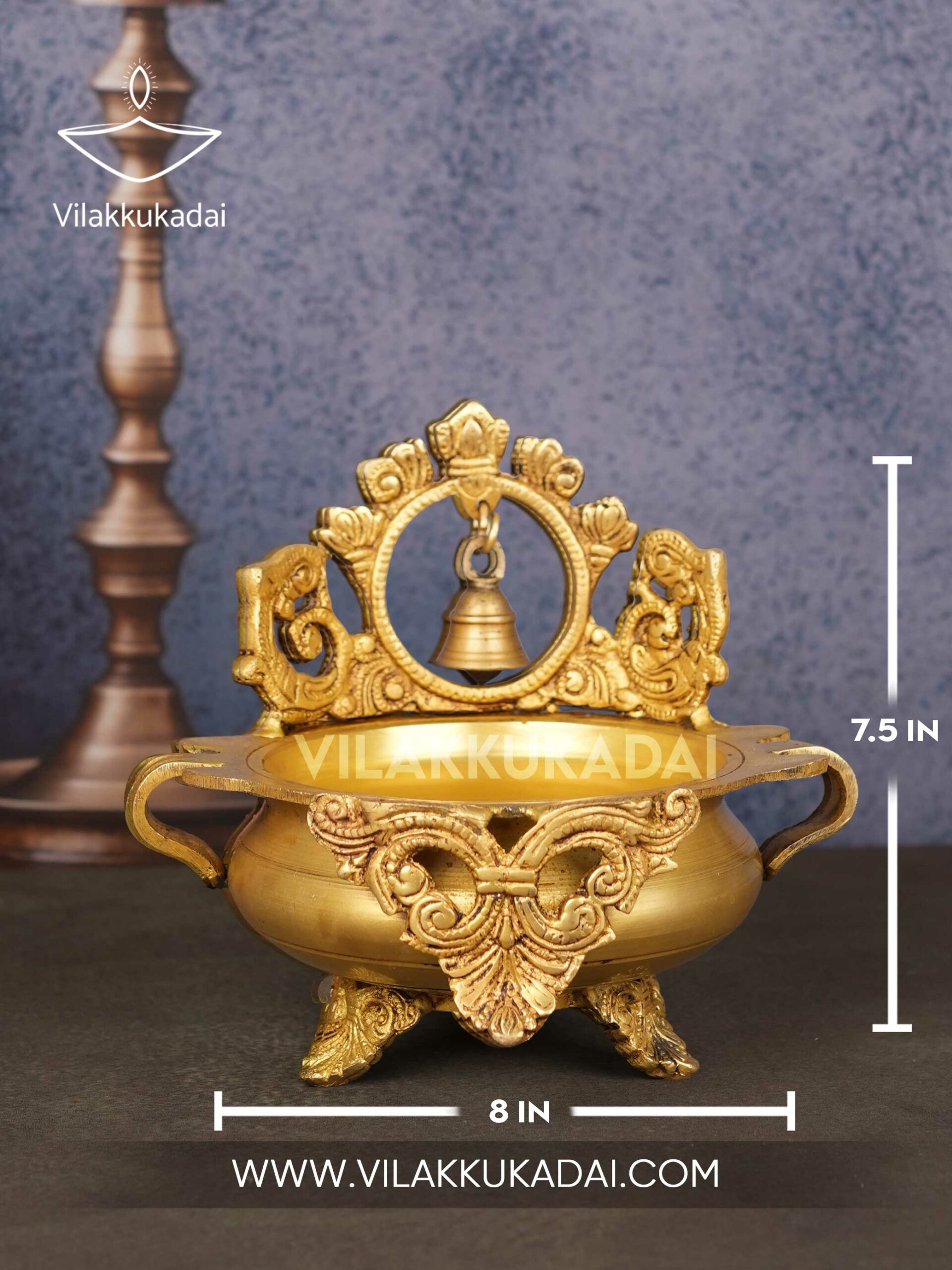
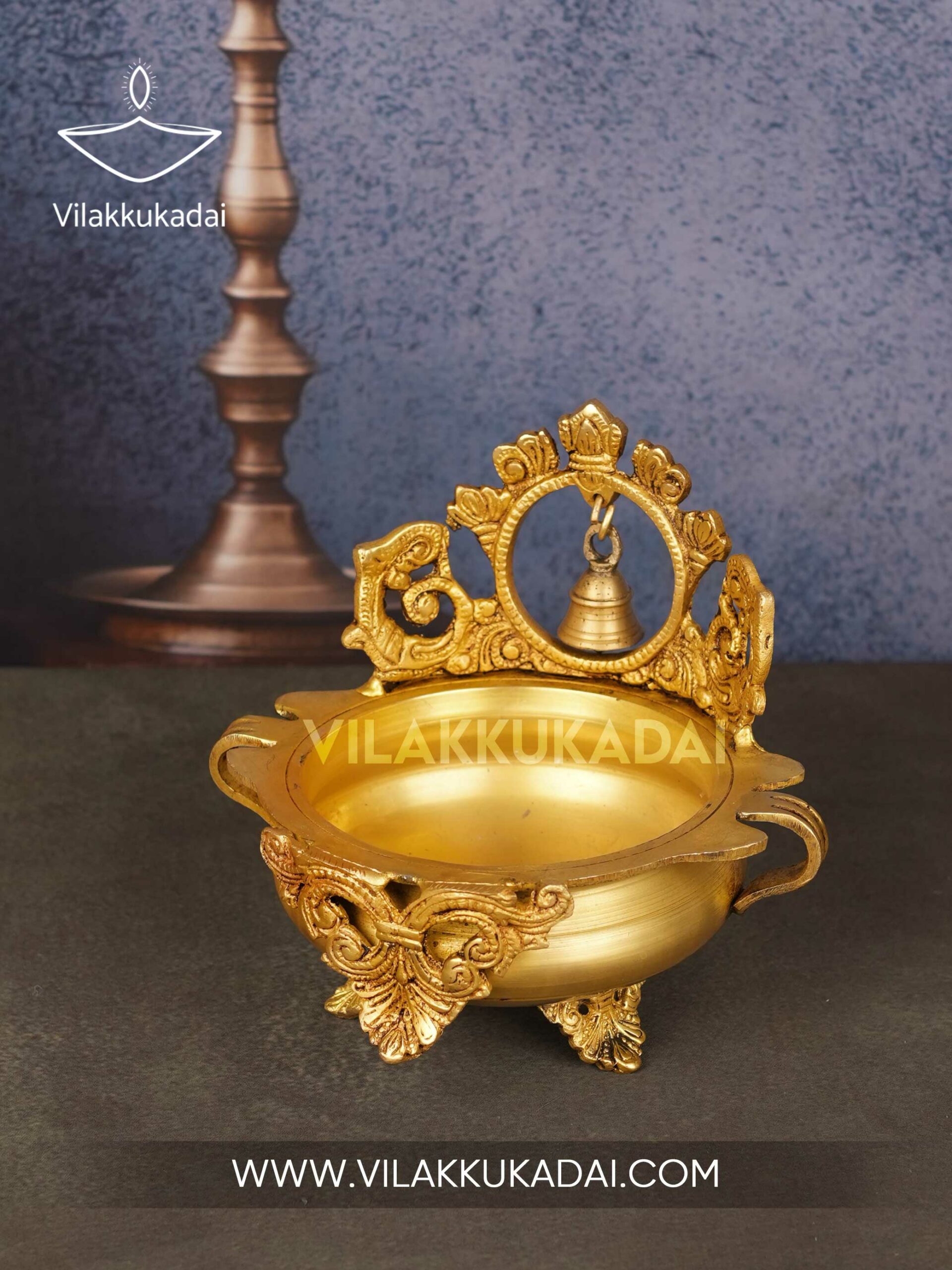
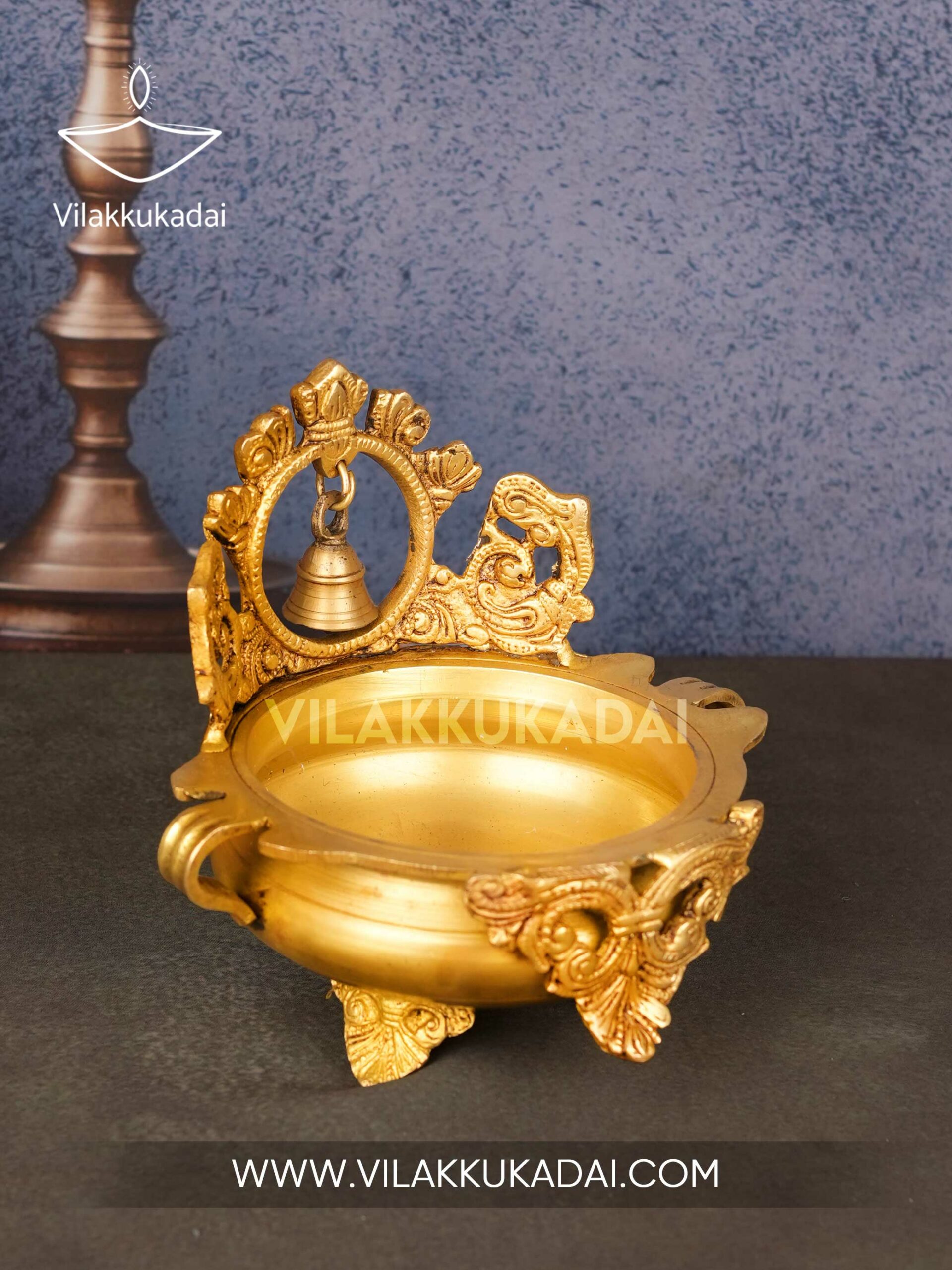
Small Bell Urli – Elegant Traditional Decor
Bell Urli Small/ 7″/ Decorative Flower Pot/ Brass Uruli/ Home Decor
₹4,235 ₹5,200
Price Summary
- ₹5,200
- ₹4,235
- 19%
- ₹4,235
- Overall you save ₹965 (19%) on this product
- Description: A shallow, round vessel, traditionally iron, clay, bronze, or brass, used for home décor.
- Purpose: To create a serene, welcoming ambiance, often placed at entrances or living areas.
- Decoration: Filled with water, floating flower petals (marigolds, lotuses), and candles or diyas for festive and calming effects.
- Significance: Represents purity, prosperity, and good energy, bringing positive Vastu vibration.
| Weight | 1.5 kg |
|---|---|
| Dimensions | 8 × 7 × 7 in |
You may also like…
Ganesh Urli/ 2.5″/ Brass Vinayagar Uruli/ Ganpati Flower Pot/ Decorative Urli
- Description: A shallow, round vessel, traditionally iron, clay, bronze, or brass, used for home décor.
- Purpose: To create a serene, welcoming ambiance, often placed at entrances or living areas.
- Decoration: Filled with water, floating flower petals (marigolds, lotuses), and candles or diyas for festive and calming effects.
- Significance: Represents purity, prosperity, and good energy, bringing positive Vastu vibrations.
- Description: Urlis with carved figures or motifs of deities (Ganesha, Lakshmi), sacred symbols (Swastik, Charan), or animals (elephants, peacocks).
- Purpose: To elevate the spiritual feel of pooja rooms or sacred spaces, acting as devotional centerpieces.
- Decoration: Same as decorative urlis (water, flowers, lights) but with added divine imagery, often used for Diwali, Ganesh Chaturthi, or daily worship.
- Significance: Connects home décor to specific deities, enhancing the sanctity and auspiciousness of the space, bringing blessings.
Decorative Urli With Deep/ 3 X 9″/ Flower Pot/ Brass Uruli With Lamp/Home Decor
- Description: A shallow, round vessel, traditionally iron, clay, bronze, or brass, used for home décor.
- Purpose: To create a serene, welcoming ambiance, often placed at entrances or living areas.
- Decoration: Filled with water, floating flower petals (marigolds, lotuses), and candles or diyas for festive and calming effects.
- Significance: Represents purity, prosperity, and good energy, bringing positive Vastu vibrations.
- Description: Urlis with carved figures or motifs of deities (Ganesha, Lakshmi), sacred symbols (Swastik, Charan), or animals (elephants, peacocks).
- Purpose: To elevate the spiritual feel of pooja rooms or sacred spaces, acting as devotional centerpieces.
- Decoration: Same as decorative urlis (water, flowers, lights) but with added divine imagery, often used for Diwali, Ganesh Chaturthi, or daily worship.
- Significance: Connects home décor to specific deities, enhancing the sanctity and auspiciousness of the space, bringing blessings.
Decorative Urli with Diya 02/ 4.5″/ Brass Flower Pot/ Uruli/ Home Decor
- Description: A shallow, round vessel, traditionally iron, clay, bronze, or brass, used for home décor.
- Purpose: To create a serene, welcoming ambiance, often placed at entrances or living areas.
- Decoration: Filled with water, floating flower petals (marigolds, lotuses), and candles or diyas for festive and calming effects.
- Significance: Represents purity, prosperity, and good energy, bringing positive Vastu vibrations.
- Description: Urlis with carved figures or motifs of deities (Ganesha, Lakshmi), sacred symbols (Swastik, Charan), or animals (elephants, peacocks).
- Purpose: To elevate the spiritual feel of pooja rooms or sacred spaces, acting as devotional centerpieces.
- Decoration: Same as decorative urlis (water, flowers, lights) but with added divine imagery, often used for Diwali, Ganesh Chaturthi, or daily worship.
- Significance: Connects home décor to specific deities, enhancing the sanctity and auspiciousness of the space, bringing blessings.
Kerala Urli/ 4″/ Flower Pot/ Brass Uruli/ Home Decor/ Decorative Bowl
An urli (or uruli) is a traditional, shallow, wide-mouthed Indian vessel, often made of brass, bronze, clay, or copper, originally used in South India for cooking large meals and preparing Ayurvedic medicines, but now popular as a decorative item for floating flowers and candles during festivals, symbolizing prosperity and hospitality.
-
-
Shape:
A wide, round, shallow bowl, derived from the Tamil word urulai (round bowl).
-
-
Materials:
Traditionally clay, copper, brass, or bronze; can also be iron or stone.
-
Traditional Use:
Cooking dishes like payasam, making herbal remedies in Ayurveda, and as large cookware for feasts.
-
Modern Decor:
Popularly used as a decorative centerpiece, filled with water, flowers (like marigolds, roses), and floating candles for a festive or serene look, especially at entrances or in living areas.
-
Cultural Significance:
Represents hospitality, prosperity, and good health, often used in Vastu Shastra to attract positive energy and balance.
In essence, an urli has evolved from a utilitarian cooking pot to a cherished decorative piece, blending cultural tradition with aesthetic appeal in modern homes.
Decorative Urli With Deep/ 6 X 14″/ Flower Pot/ Brass Uruli/ Home Decor
- Description: A shallow, round vessel, traditionally iron, clay, bronze, or brass, used for home décor.
- Purpose: To create a serene, welcoming ambiance, often placed at entrances or living areas.
- Decoration: Filled with water, floating flower petals (marigolds, lotuses), and candles or diyas for festive and calming effects.
- Significance: Represents purity, prosperity, and good energy, bringing positive Vastu vibrations.
- Description: Urlis with carved figures or motifs of deities (Ganesha, Lakshmi), sacred symbols (Swastik, Charan), or animals (elephants, peacocks).
- Purpose: To elevate the spiritual feel of pooja rooms or sacred spaces, acting as devotional centerpieces.
- Decoration: Same as decorative urlis (water, flowers, lights) but with added divine imagery, often used for Diwali, Ganesh Chaturthi, or daily worship.
- Significance: Connects home décor to specific deities, enhancing the sanctity and auspiciousness of the space, bringing blessings.
Decorative Urli With Lamp/ Flower Pot/ Urli Decor/ Brass Uruli/ Home Decor
- Description: A shallow, round vessel, traditionally iron, clay, bronze, or brass, used for home décor.
- Purpose: To create a serene, welcoming ambiance, often placed at entrances or living areas.
- Decoration: Filled with water, floating flower petals (marigolds, lotuses), and candles or diyas for festive and calming effects.
- Significance: Represents purity, prosperity, and good energy, bringing positive Vastu vibrations.
- Description: Urlis with carved figures or motifs of deities (Ganesha, Lakshmi), sacred symbols (Swastik, Charan), or animals (elephants, peacocks).
- Purpose: To elevate the spiritual feel of pooja rooms or sacred spaces, acting as devotional centerpieces.
- Decoration: Same as decorative urlis (water, flowers, lights) but with added divine imagery, often used for Diwali, Ganesh Chaturthi, or daily worship.
- Significance: Connects home décor to specific deities, enhancing the sanctity and auspiciousness of the space, bringing blessings.
Heavy Urli
-
-
Shape:A wide, round, shallow bowl, derived from the Tamil word urulai (round bowl).
-
-
Materials:Traditionally clay, copper, brass, or bronze; can also be iron or stone.
-
Traditional Use:Cooking dishes like payasam, making herbal remedies in Ayurveda, and as large cookware for feasts.
-
Modern Decor:Popularly used as a decorative centerpiece, filled with water, flowers (like marigolds, roses), and floating candles for a festive or serene look, especially at entrances or in living areas.
-
Cultural Significance:Represents hospitality, prosperity, and good health, often used in Vastu Shastra to attract positive energy and balance.
Elephant Urli/ 7.5″/ Decorative Urli/ Brass Uruli/ Flower Pot/ Home Decor
- Description: A shallow, round vessel, traditionally iron, clay, bronze, or brass, used for home décor.
- Purpose: To create a serene, welcoming ambiance, often placed at entrances or living areas.
- Decoration: Filled with water, floating flower petals (marigolds, lotuses), and candles or diyas for festive and calming effects.
- Significance: Represents purity, prosperity, and good energy, bringing positive Vastu vibrations.
- Description: Urlis with carved figures or motifs of deities (Ganesha, Lakshmi), sacred symbols (Swastik, Charan), or animals (elephants, peacocks).
- Purpose: To elevate the spiritual feel of pooja rooms or sacred spaces, acting as devotional centerpieces.
- Decoration: Same as decorative urlis (water, flowers, lights) but with added divine imagery, often used for Diwali, Ganesh Chaturthi, or daily worship.
- Significance: Connects home décor to specific deities, enhancing the sanctity and auspiciousness of the space, bringing blessings.
Heavy Urli/ 4″/ Decorative Flower Pot/ Uruli/ Brass Bowl/ Home Decor
An urli (or uruli) is a traditional, shallow, wide-mouthed Indian vessel, often made of brass, bronze, clay, or copper, originally used in South India for cooking large meals and preparing Ayurvedic medicines, but now popular as a decorative item for floating flowers and candles during festivals, symbolizing prosperity and hospitality.
-
-
Shape:
A wide, round, shallow bowl, derived from the Tamil word urulai (round bowl).
-
-
Materials:
Traditionally clay, copper, brass, or bronze; can also be iron or stone.
-
Traditional Use:
Cooking dishes like payasam, making herbal remedies in Ayurveda, and as large cookware for feasts.
-
Modern Decor:
Popularly used as a decorative centerpiece, filled with water, flowers (like marigolds, roses), and floating candles for a festive or serene look, especially at entrances or in living areas.
-
Cultural Significance:
Represents hospitality, prosperity, and good health, often used in Vastu Shastra to attract positive energy and balance.
In essence, an urli has evolved from a utilitarian cooking pot to a cherished decorative piece, blending cultural tradition with aesthetic appeal in modern homes.
Decorative Urli with Bell 04/ 7″/ Decorative Uruli/ Brass Flower Pot/ Home Decor
- Description: A shallow, round vessel, traditionally iron, clay, bronze, or brass, used for home décor.
- Purpose: To create a serene, welcoming ambiance, often placed at entrances or living areas.
- Decoration: Filled with water, floating flower petals (marigolds, lotuses), and candles or diyas for festive and calming effects.
- Significance: Represents purity, prosperity, and good energy, bringing positive Vastu vibrations.
- Description: Urlis with carved figures or motifs of deities (Ganesha, Lakshmi), sacred symbols (Swastik, Charan), or animals (elephants, peacocks).
- Purpose: To elevate the spiritual feel of pooja rooms or sacred spaces, acting as devotional centerpieces.
- Decoration: Same as decorative urlis (water, flowers, lights) but with added divine imagery, often used for Diwali, Ganesh Chaturthi, or daily worship.
- Significance: Connects home décor to specific deities, enhancing the sanctity and auspiciousness of the space, bringing blessings.
Related Products
Peacock Statue/ 4.5 X 1.5″/ Brass Peacock Idol/ Peacock Figurines/ Home Decor
The peacock is a potent symbol of beauty, grace, purity, renewal, and prosperity in various cultures and spiritual practices like Vastu Shastra and Feng Shui.
-
Home & Office Decor:
Enhances the beauty of living rooms, offices, patios, and gardens.
-
Spiritual & Religious Practices:
Ideal for altars and temples, symbolizing divine presence and auspiciousness.
-
Gifting:A thoughtful and meaningful gift for housewarmings, weddings, anniversaries, and religious festivals.THE PEACOCK
- The peacock has been depicted in art since the ancient times and is seen as a symbol of beauty, rebirth and wealth, as well as of sinful pride.
- The birds originally came from India over 4,000 years ago where they were symbols of royalty and from the 1800s, they began to populate Western visual and decorative culture.
- “Similarly, in vastu, peacocks signify beauty, grace, and good luck. Hence, placing peacock-related décor items or motifs in the house or workplace can bring positivity and great fortune.
Single Face Annam Kuthu Vilakku/ 9 X 4″/ Brass Lamp/ Annapakshi Lamp/ Puja Mandir
Annam Kuthu Vilakku
Ravanan/ 7″/ Brass Ten Head Ravan Statue/ King of Lanka/ Brass Idol
Ravanan
Fish Candle Stand/ 5″/ Brass Candle Holder/ Home Decoration
Candle Stand
Chinese Candle Stand/ 7″/ Brass Candle Holder/ Candle Vilakku/ Candle Lamp/ Home Decor
Candle Stand
ALAVUDEEN ARPUTHA VILAKKU
Alavudeen Arputha Vilakku
Astalakshmi On Tortise With Mahameru
MAHA MERU
- Maha Meru” , in Sanskrit and Pali means “Great Mountain” or “Mount Meru”.
- Maha Meru is a sacred mountain in Hindu, Buddhist, and Jain cosmologies, representing THE CENTRE OF UNIVERSE and THE AXIS OF COSMOS.
- Maha Meru also a 3D representation of the Sri Yantra,
- A mystical diagram in Tantric Hinduism. This is the primary meaning of Maha Meru, referring to the central, five-peaked mountain in these religious traditions. Maha Meru considered the axis mundi, connecting the heavens and earth.
- It is also a symbol of divine energy and is used in worship practices.
Naga Deepam/ 3″/ Agal Vilakku/ Brass Lamp/ Brass Vilakku/ Brass Pooja Diya
Naga Deepam
Jula Ganesh With Lamp/ 9″/ Jhula Ganesh/ Brass Vinayaka Idol/ Ganapathi/ Ganapathy
Ganesha, the son of Lord Shiva and Devi Parvati is popularly worshipped under different names like Sumukha, Ekadanta, Kapila, Gajakarna, Lambodara, Vikath, Vidhananashaka, Vinayaka, Dhumraketu, Ganadhayaksha, Bhalchandra and Gajanana.
The large elephant head of Lord Ganesha symbolizes wisdom, understanding, and a discriminating intellect that one must possess to attain perfection in life.
mooshak (mouse) also symbolizes uncontrolled desires and ego that can nibble all that is good and noble in a person.
Decorative Hanging Lamp/ 10″/ Brass Thooku Vilakku/ Thongu Vilakku/ Hanging Diya
Decorative Hanging Lamp
Visvaroopa Darshana Sangu/ 9″/ Vishnu Shankh/ Brass Conch/ Vishnu Conch
Visvaroopa Darshana Sangu
Jhula Krishna Statue/ 10 X 6.5″/ Brass Baby Krishna Murti/ Butter Krishna Idol
Krishna is a major deity in Hinduism. He is worshipped as the eighth avatar of Vishnu and also as the Supreme god in his own right.
He is the god of protection, compassion, tenderness, and love is one of the most popular and widely revered among Indian divinities.Krishna’s birthday is clebrated every year by Hindus on Krishna Janmashtami according to the lunisolar Hindu calendar.Within the Indian epic Mahabharata, Krishna was the son of the Yadava chief Vasudeva and his mother was Devaki. Hence he was known as Vāsudeva-Krishna or Vāsudeva
Recently Viewed
Step Paavai Vilakku/ Brass Welcome Lady/ Decorative Lamp/ Pavai Vilakku/ Brass Lamp
Paavai Vilaku or a Lady Holding a Lamp is a very popular Hindu religious motif. The symbolism associated with it is auspiciousness. Gift during marriages, house warming and other similar functions .