

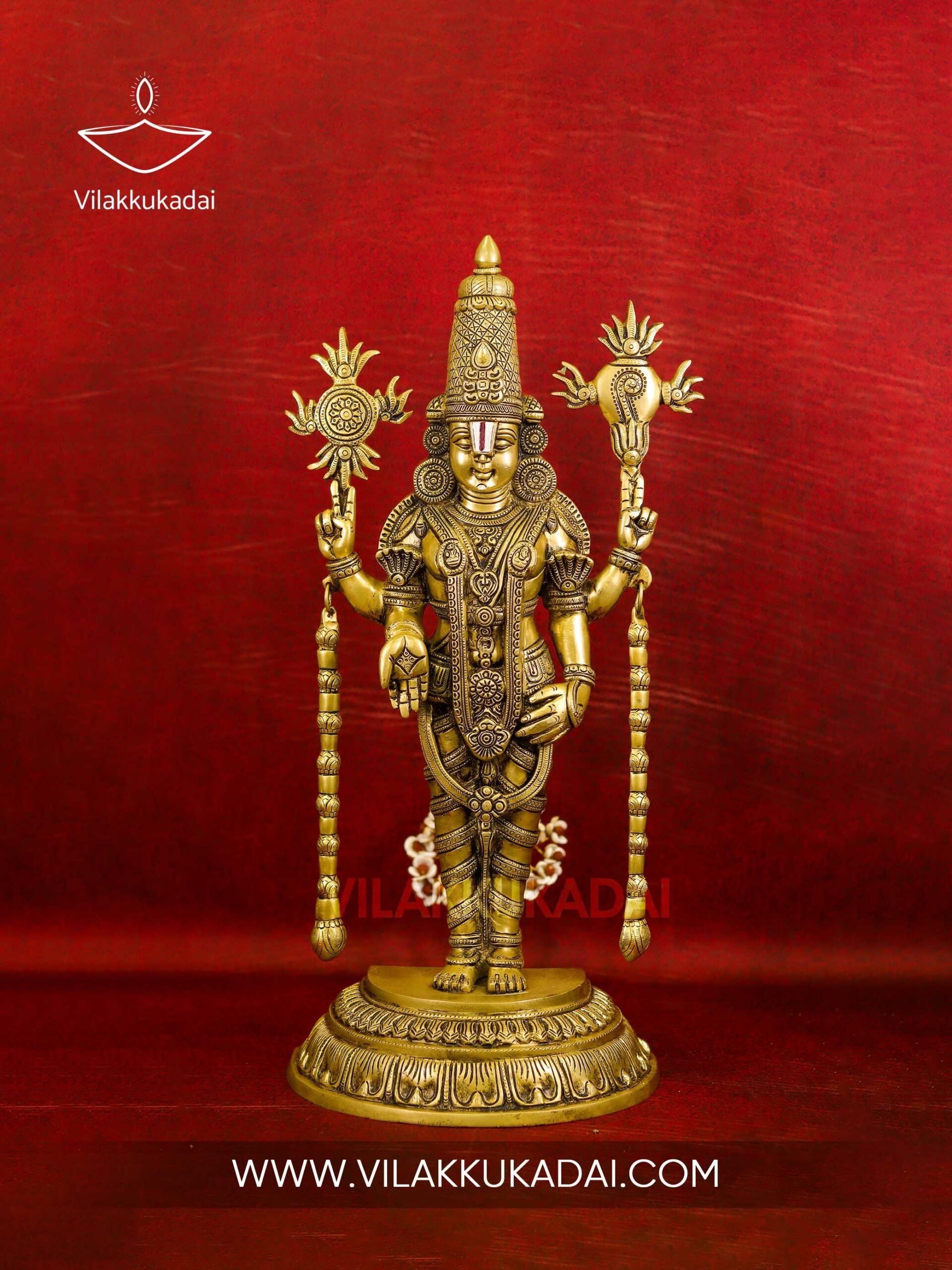
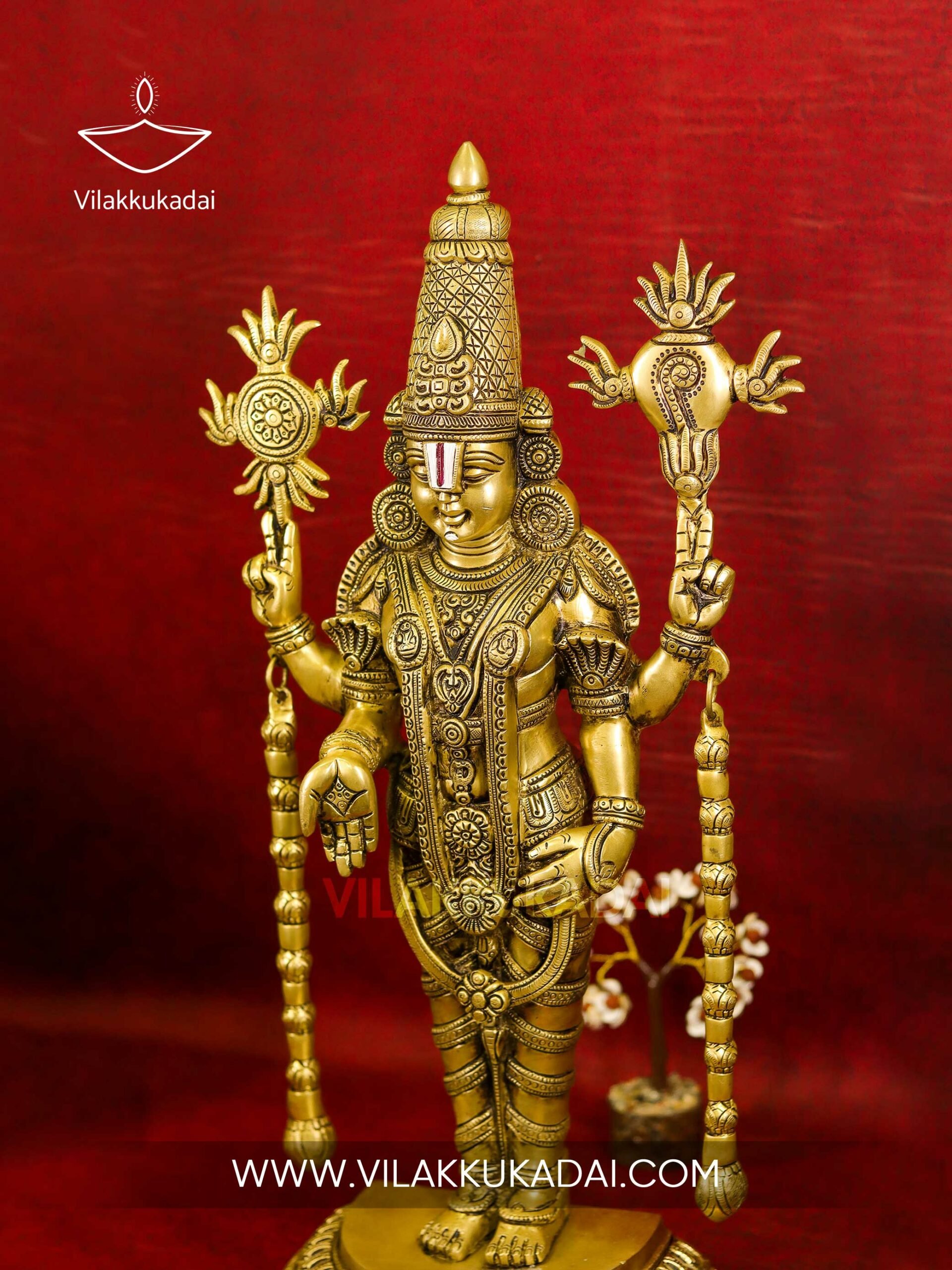
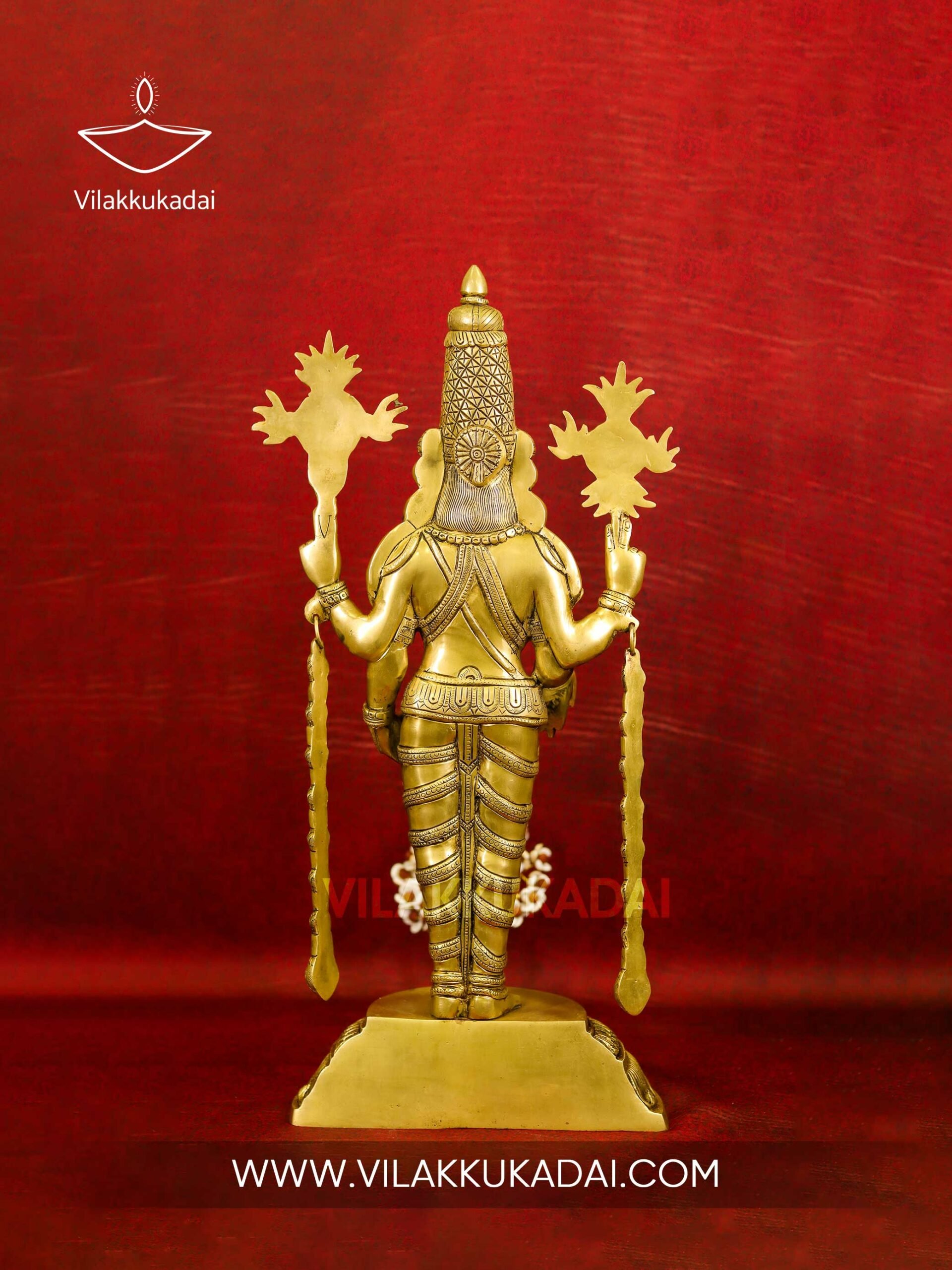
Perumal Statue or Tirumal is a Hindu deity. Perumal is worshipped mainly among Tamil Hindus in South India, Sri Lanka, and the Tamil diasporA
a, who consider Perumal to be a form of Vishnu. Perumal. God of Vaikuntha.
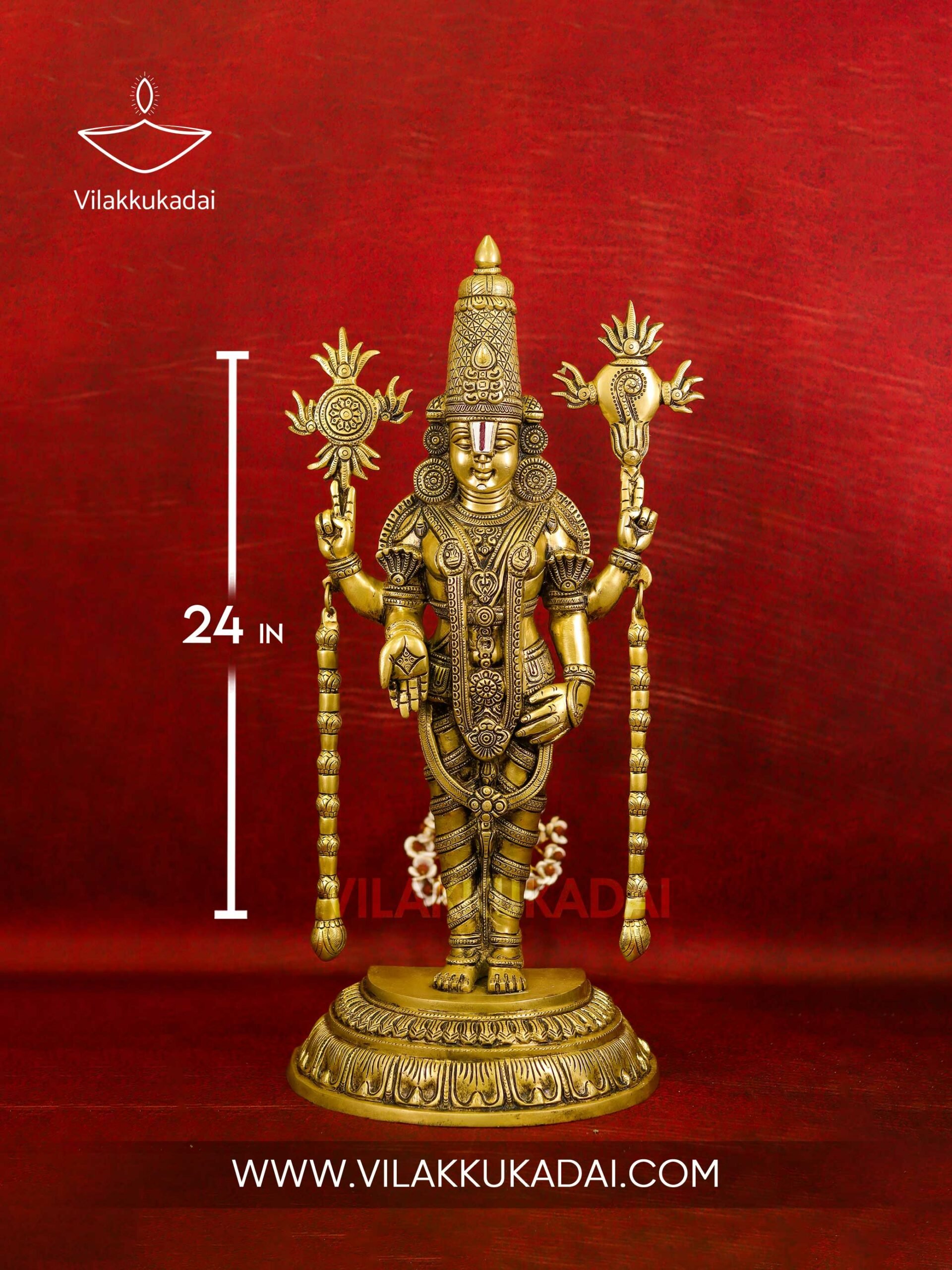
Perumal Statue/ 24″/ Balaji Murti/ Brass Idol/ Venkateswara Statue/ Venkatachalapathy
₹24,450 ₹25,980
Price Summary
- ₹25,980
- ₹24,450
- 6%
- ₹24,450
- Overall you save ₹1,530 (6%) on this product
This hand-crafted piece may have slight irregularities and imperfections which only add to the unique charm of the product.
This product is crafted from brass that is considered to be a sacred metal and traditionally used in prayer accessories.
SHIPPING INFO:
Dispatched in a maximum of 7-10 business days. This item is not eligible for return. Cancellation requests will be accepted strictly within 24 hours of placing the order only. This product is made on order.
For ordering out of India please Contact us in Whatsapp. Website shipment only within India
| Weight | 10.000 kg |
|---|---|
| Dimensions | 6.5 × 11 × 24 in |
Related Products
Pradosha Nayagar/ 5.5″/ Brass Shiv Parivar Murti/ Shiva Parvati/ Sivan And Parvathi
The Hindu God Shiva was originally known as Rudra, a minor deity addressed only three times in the Rig Veda. Shiva is known as “The Destroyer” within the Trimurti, the Hindu trinity which also includes Brahma and Vishnu. In the Shaivite tradition, Shiva is the Supreme Lord who creates, protects and transforms the universe.
Shiva is known by many names such as Viswanatha (lord of the universe), Mahadeva, Mahandeo, Mahasu, Mahesha, Maheshvara, Shankara, Shambhu, Rudra, Hara, Trilochana, Devendra (chief of the gods), Neelakanta, Subhankara, Trilokinatha (lord of the three realms), and Ghrneshwar (lord of compassion).
Murugan 7″
Murugar or Kandhan is the Tamil God of war and victory.
Murugar, considered as the son of Shiva and Parvathi.
Murugar is considered the God of Tamil language and he is mentioned a lot in Sangam literature.
Murugar has six shrines in Tamil Nadu, which are known as Arupadaiveedu.
The six abodes of Karthikeya are all in Tamil Nadu.
The six sites (padaiveedu) in Tamil Nadu where Murugar sojourned while leading his armies are Palani, Swamimalai, Thiruparamkundram, Pazhamudirsolai, Thiruthani and Thiruchendur, the Arupadaiveedu.
Ayyapan with Thiruvachi 6″
- Sabarimala Ayyappa with Thiruvachi, seated in a yoga position with Chinmuthrai.
AYYAPPAN
- Ayyappan is “lord-father” or “revered father,” and he is considered the son of Vishnu and Shiva.
-
Ayyappan is a deity who is always celibate and is depicted in a yogic posture, often with a bell around his neck.
-
In Hindu mythology, Ayyappan is considered the son of Mohini (the female form of Vishnu) and Shiva.
-
Ayyappan is also known as Dharmasastha, Sastha, and Hariharasuthan, all of which have meanings related to his role as a ruler or protector.
-
Ayyappan is often associated with the concepts of compassion, wisdom, and austerity, and he is seen as a symbol of unity among all sects of Hinduism.
Murugan 5″
Murugar or Kandhan is the Tamil God of war and victory.
Murugar, considered as the son of Shiva and Parvathi.
Murugar is considered the God of Tamil language and he is mentioned a lot in Sangam literature.
Murugar has six shrines in Tamil Nadu, which are known as Arupadaiveedu.
The six abodes of Karthikeya are all in Tamil Nadu.
The six sites (padaiveedu) in Tamil Nadu where Murugar sojourned while leading his armies are Palani, Swamimalai, Thiruparamkundram, Pazhamudirsolai, Thiruthani and Thiruchendur, the Arupadaiveedu.
Laddu Ganesh 3.5″
Ganesha, the son of Lord Shiva and Devi Parvati is popularly worshipped under different names like Sumukha, Ekadanta, Kapila, Gajakarna, Lambodara, Vikath, Vidhnanashaka, Vinayaka, Dhumraketu, Ganadhayaksha, Bhalchandra and Gajanana.
The large elephant head of Lord Ganesha symbolizes wisdom, understanding, and a discriminating intellect that one must possess to attain perfection in life.
mooshak (mouse) also symbolizes uncontrolled desires and ego that can nibble all that is good and noble in a person.
Brass Chair Ganesh 5″/ Rocking Chair Ganesha in Brass
Ganesha, the son of Lord Shiva and Devi Parvati is popularly worshipped under different names like Sumukha, Ekadanta, Kapila, Gajakarna, Lambodara, Vikath, Vidhnanashaka, Vinayaka, Dhumraketu, Ganadhayaksha, Bhalchandra and Gajanana.
The large elephant head of Lord Ganesha symbolizes wisdom, understanding, and a discriminating intellect that one must possess to attain perfection in life.
mooshak (mouse) also symbolizes uncontrolled desires and ego that can nibble all that is good and noble in a person.
Vinayagar on manai 3.5″
Ganesha, the son of Lord Shiva and Devi Parvati is popularly worshipped under different names like Sumukha, Ekadanta, Kapila, Gajakarna, Lambodara, Vikath, Vidhnanashaka, Vinayaka, Dhumraketu, Ganadhayaksha, Bhalchandra and Gajanana.
The large elephant head of Lord Ganesha symbolizes wisdom, understanding, and a discriminating intellect that one must possess to attain perfection in life.
mooshak (mouse) also symbolizes uncontrolled desires and ego that can nibble all that is good and noble in a person.
Modern Crown Ganesh
Ganesha, the son of Lord Shiva and Devi Parvati is popularly worshipped under different names like Sumukha, Ekadanta, Kapila, Gajakarna, Lambodara, Vikath, Vidhnanashaka, Vinayaka, Dhumraketu, Ganadhayaksha, Bhalchandra and Gajanana.
The large elephant head of Lord Ganesha symbolizes wisdom, understanding, and a discriminating intellect that one must possess to attain perfection in life.
mooshak (mouse) also symbolizes uncontrolled desires and ego that can nibble all that is good and noble in a person.
NATARAJAR 8″
Nataraja is a depiction of the Hindu god Shiva as the divine cosmic dancer. His dance is called Tandava.The pose and artwork are described in many Hindu texts such as the Tevaram, Thiruvasagam in Tamil.
He is commonly referred as Koothan( கூத்தன்), Sabesan( சபேசன்) and Ambalavanan (அம்பலவாணன்) in various Tamil texts.
The sculpture is symbolic of Shiva as the lord of dance and dramatic arts, with its style and proportions made according to Hindu texts on arts. Tamil Devotional texts such as Tirumurai (The twelve books of Southern Shaivism) speaks that Nataraja is the form of Shiva in which he does Creation, destruction, Preserving, Maya and Blessing.Thus Nataraja is considered one of the highest forms of Shiva
Siddhi Buddhi Vinayagar 5″
Ganesha, the son of Lord Shiva and Devi Parvati is popularly worshipped under different names like Sumukha, Ekadanta, Kapila, Gajakarna, Lambodara, Vikath, Vidhnanashaka, Vinayaka, Dhumraketu, Ganadhayaksha, Bhalchandra and Gajanana.
The large elephant head of Lord Ganesha symbolizes wisdom, understanding, and a discriminating intellect that one must possess to attain perfection in life.
mooshak (mouse) also symbolizes uncontrolled desires and ego that can nibble all that is good and noble in a person.
Ayyapan with Thiruvachi 11.5″
- Sabarimala Ayyappa with Thiruvachi, seated in a yoga position with
AYYAPPAN
- Ayyappan is “lord-father” or “revered father,” and he is considered the son of Vishnu and Shiva.
-
Ayyappan is a deity who is always celibate and is depicted in a yogic posture, often with a bell around his neck.
-
In Hindu mythology, Ayyappan is considered the son of Mohini (the female form of Vishnu) and Shiva.
-
Ayyappan is also known as Dharmasastha, Sastha, and Hariharasuthan, all of which have meanings related to his role as a ruler or protector. Ayyappan is often associated with the concepts of compassion, wisdom, and austerity, and he is seen as a symbol of unity among all sects of Hinduism.
Chinmuthra.
NATARAJAR 10″
Nataraja is a depiction of the Hindu god Shiva as the divine cosmic dancer. His dance is called Tandava.The pose and artwork are described in many Hindu texts such as the Tevaram, Thiruvasagam in Tamil.
He is commonly referred as Koothan( கூத்தன்), Sabesan( சபேசன்) and Ambalavanan (அம்பலவாணன்) in various Tamil texts.
The sculpture is symbolic of Shiva as the lord of dance and dramatic arts, with its style and proportions made according to Hindu texts on arts. Tamil Devotional texts such as Tirumurai (The twelve books of Southern Shaivism) speaks that Nataraja is the form of Shiva in which he does Creation, destruction, Preserving, Maya and Blessing.Thus Nataraja is considered one of the highest forms of Shiva


