







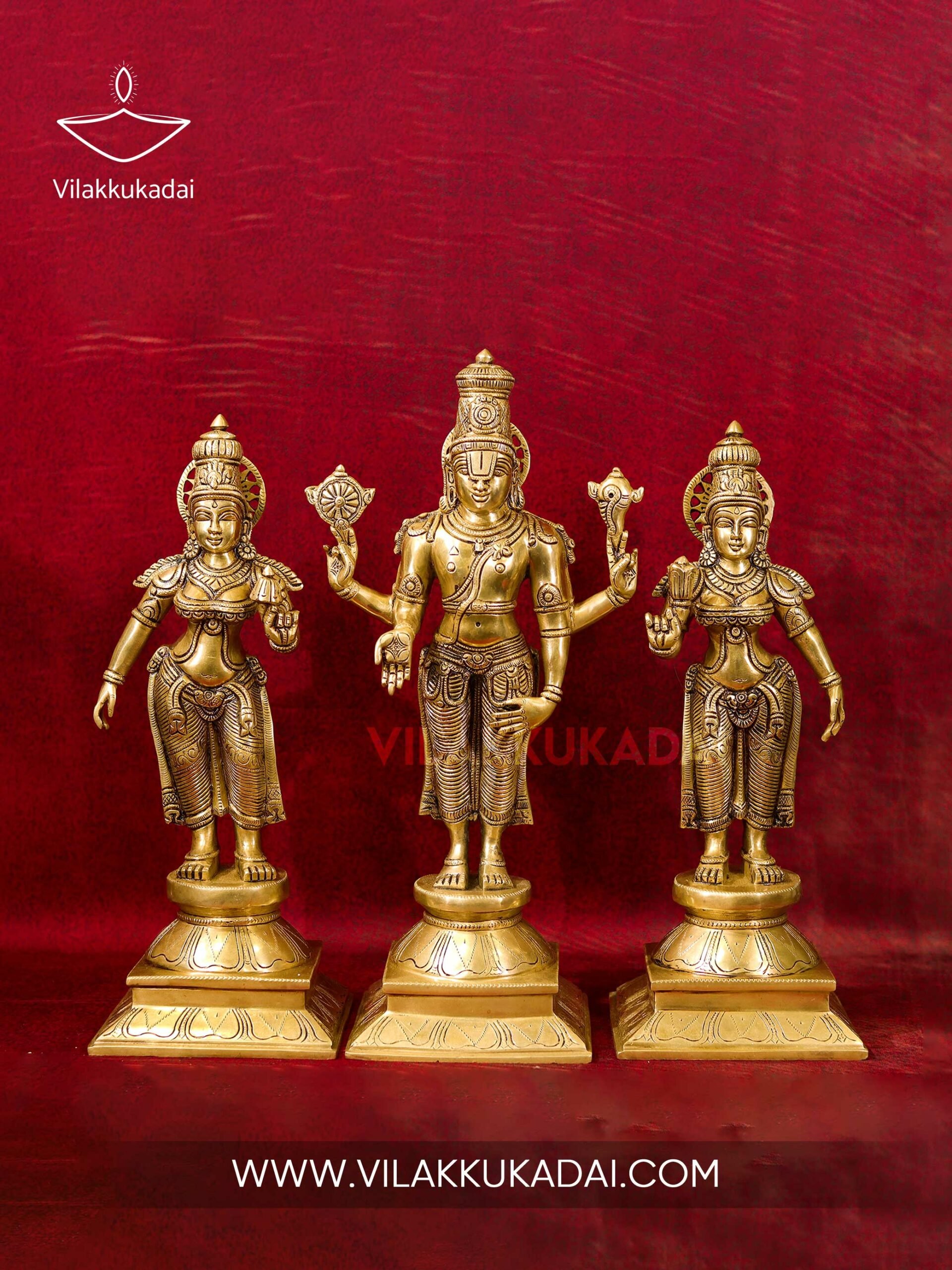
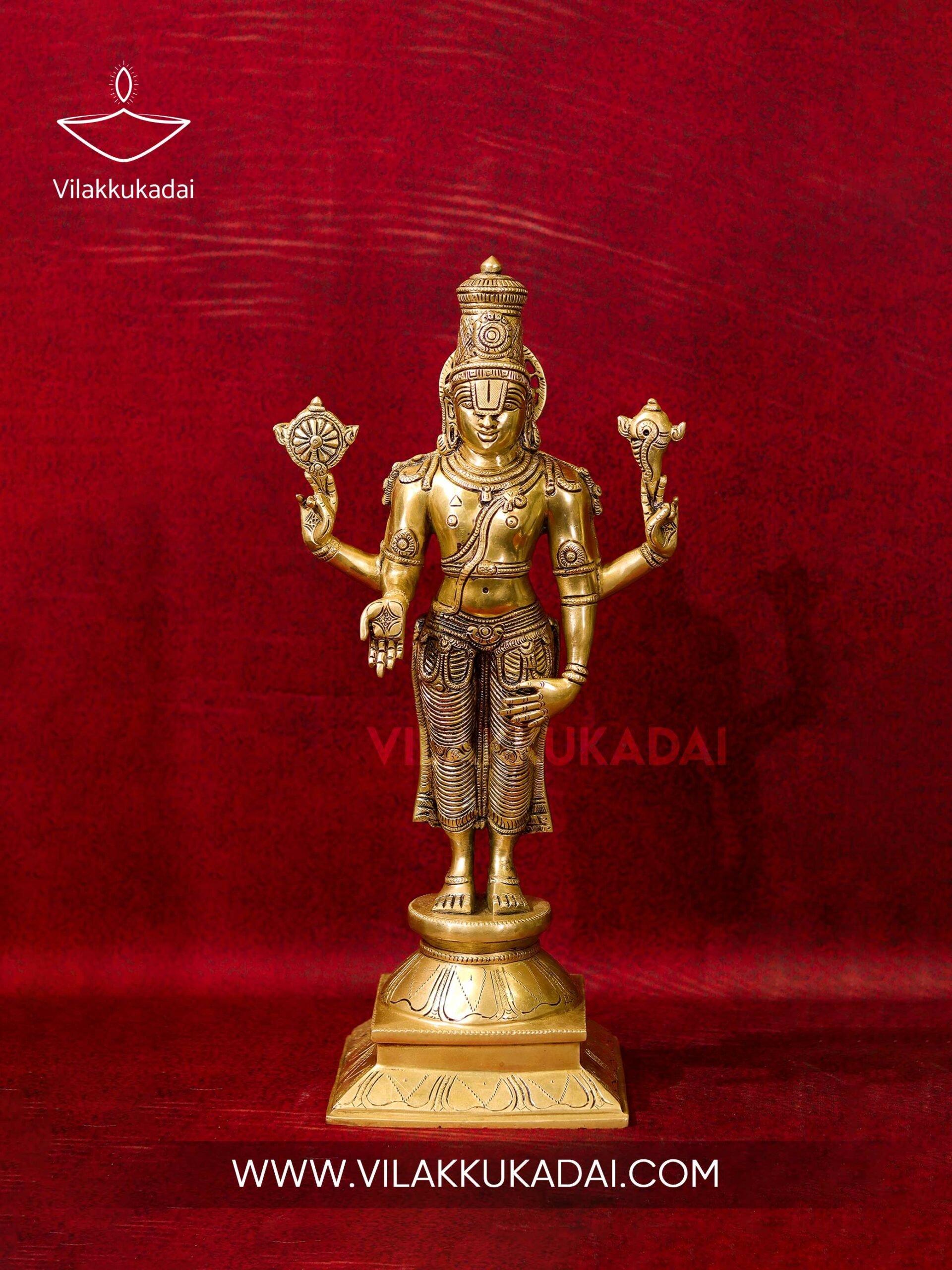
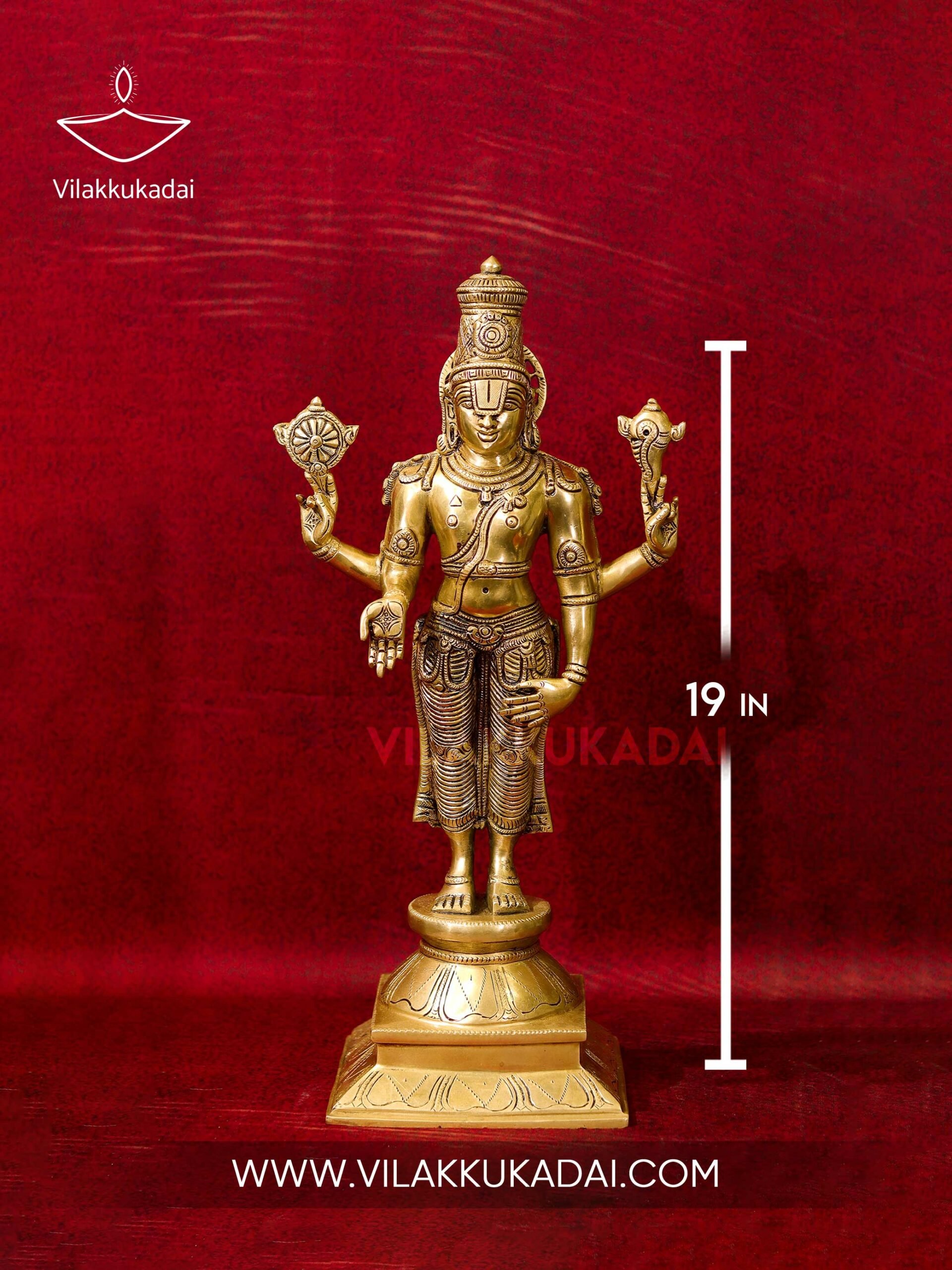
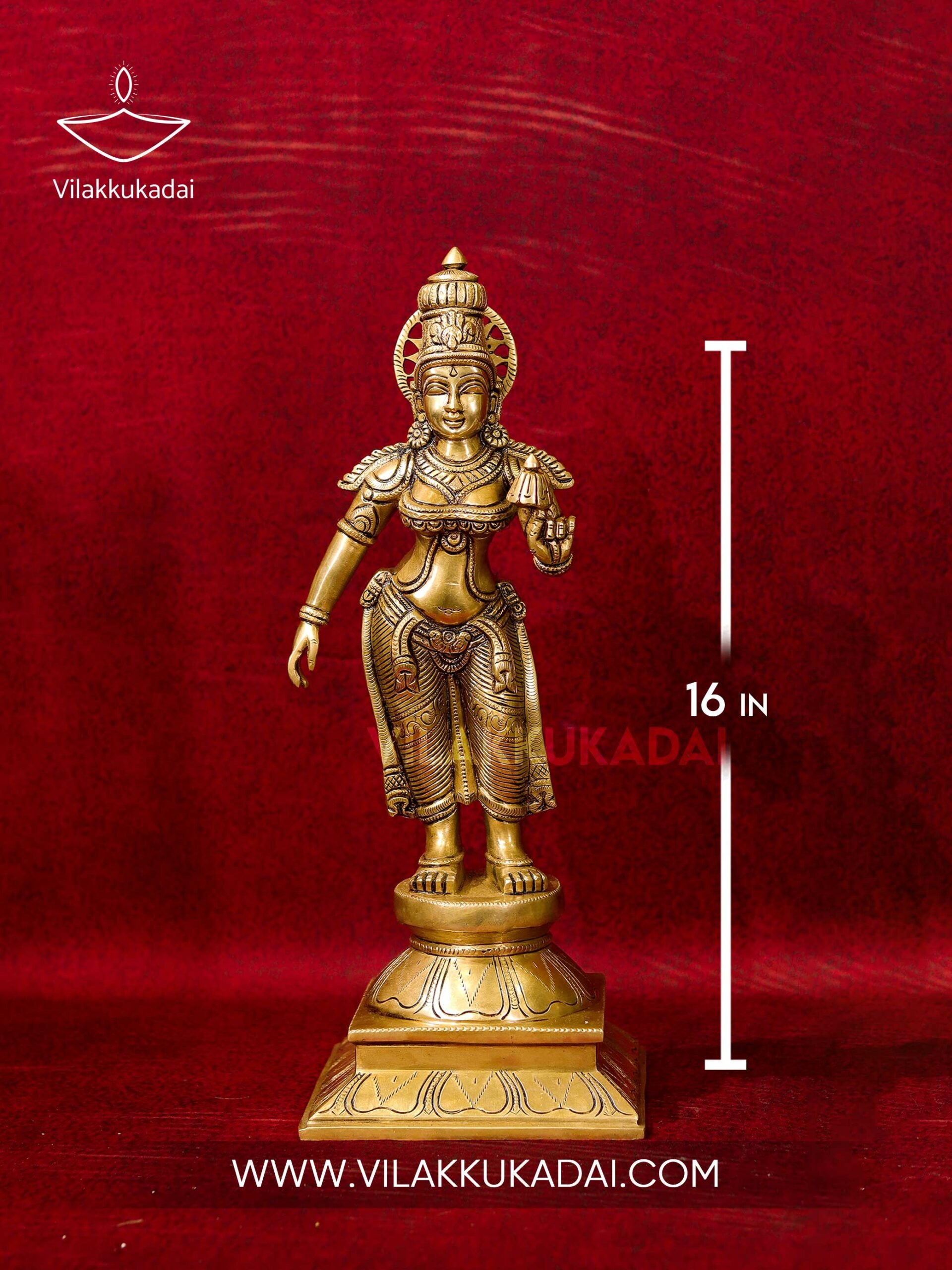
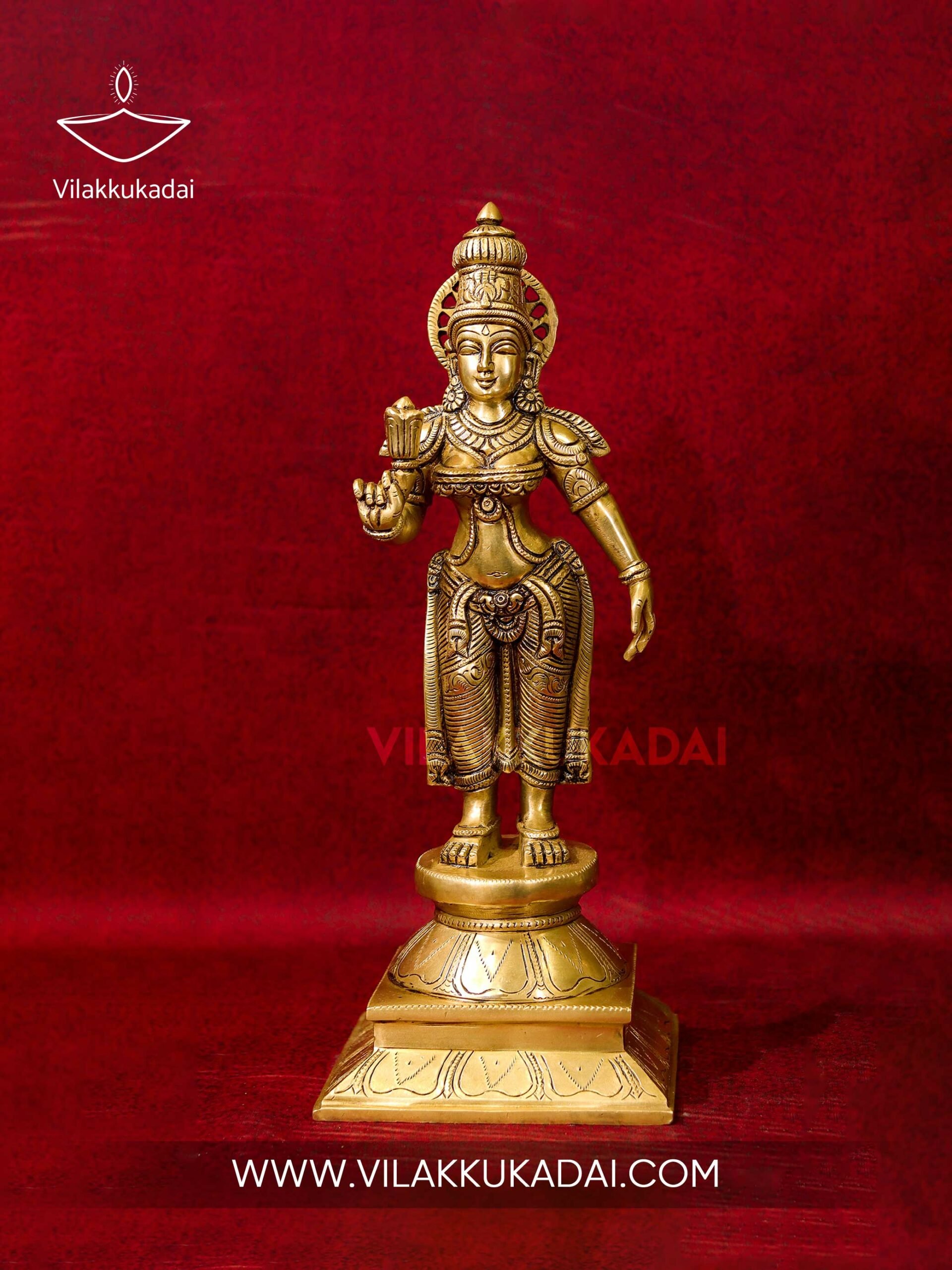


Perumal Set or Tirumal is a Hindu deity. Perumal is worshipped mainly among Tamil Hindus in South India, Sri Lanka, and the Tamil diasporA
a, who consider Perumal to be a form of Vishnu. Perumal. God of Vaikuntha.
Perumal Set/ 19″/ Perumal Thayar/ Brass Balaji Murti/ Venkateswara Statue
₹53,050 ₹61,010
13% Off
Close
Price Summary
- ₹61,010
- ₹53,050
- 13%
- ₹53,050
- Overall you save ₹7,960 (13%) on this product
In Stock
Highlights:
This hand-crafted piece may have slight irregularities and imperfections which only add to the unique charm of the product.
This product As crafted from brass that is considered to be a sacred metal and traditionally used in prayer accessories
SHIPPING INFO:
Dispatched in a maximum of 10-20 business days. This item is not eligible for return. Cancellation requests will be accepted strictly within 24 hours of placing the order only. This product is made on order.
For ordering out of India please Contact us in Whatsapp. Website shipment only within India
SKU: PS0019
Categories: Brass God Idols, Perumal
Tags: BALAJI, Brass Idol, Brass Idols, Brass Product, God Idols, GODESS IDOL, PERUMAL, VENKATACHALAPATHY, Venkateshwara, Venkateswara
Description
Additional information
| Weight | 20.5 kg |
|---|---|
| Dimensions | 6.5 × 9 × 19 in |
Related Products


Vinayagar On Beedam/ 3.5″/ Ganpati Murti/ Vinayaka Idol/ Brass Idol/ Ganesh Murti
Highlights:
Ganesha, the son of Lord Shiva and Devi Parvati is popularly worshipped under different names like Sumukha, Ekadanta, Kapila, Gajakarna, Lambodara, Vikath, Vidhnanashaka, Vinayaka, Dhumraketu, Ganadhayaksha, Bhalchandra and Gajanana.
The large elephant head of Lord Ganesha symbolizes wisdom, understanding, and a discriminating intellect that one must possess to attain perfection in life.
mooshak (mouse) also symbolizes uncontrolled desires and ego that can nibble all that is good and noble in a person.
₹1,374 ₹1,409
2% Off


Murugan 5″
Highlights:
Murugar or Kandhan is the Tamil God of war and victory.
Murugar, considered as the son of Shiva and Parvathi.
Murugar is considered the God of Tamil language and he is mentioned a lot in Sangam literature.
Murugar has six shrines in Tamil Nadu, which are known as Arupadaiveedu.
The six abodes of Karthikeya are all in Tamil Nadu.
The six sites (padaiveedu) in Tamil Nadu where Murugar sojourned while leading his armies are Palani, Swamimalai, Thiruparamkundram, Pazhamudirsolai, Thiruthani and Thiruchendur, the Arupadaiveedu.
₹1,290 ₹1,550
17% Off


Lakshmi Varahar 3.5″
Highlights:
VARAHAR
- Varaha Avatar is rife with profound symbolism that resonates with spiritual and philosophical themes.
- The boar, a creature of the Earth, represents the divine descending into the material realm to confront the challenges of demonic forces. Varaha’s tusks, illuminating like celestial spears, symbolize the divine weapons that pierce through the veil of darkness, dispelling ignorance, and restoring righteousness.
- The act of rescuing the Earth from the cosmic depths symbolizes the divine commitment to preserving and nurturing the material world.
- The Varaha Avatar story goes beyond its myth and teaches us lasting lessons. It’s a tale of cosmic redemption, showing how the powerful divine can bring back balance and harmony even when everything seems chaotic.
₹1,340 ₹1,980
32% Off


Laddu Ganesh 3.5″
Highlights:
Ganesha, the son of Lord Shiva and Devi Parvati is popularly worshipped under different names like Sumukha, Ekadanta, Kapila, Gajakarna, Lambodara, Vikath, Vidhnanashaka, Vinayaka, Dhumraketu, Ganadhayaksha, Bhalchandra and Gajanana.
The large elephant head of Lord Ganesha symbolizes wisdom, understanding, and a discriminating intellect that one must possess to attain perfection in life.
mooshak (mouse) also symbolizes uncontrolled desires and ego that can nibble all that is good and noble in a person.
₹978 ₹1,150
15% Off


Natarajar Idol/ 4″/ Siva Natraja Murti/ Shiva Natraj Statue/ Brass Idol
Highlights:
Nataraja is a depiction of the Hindu god Shiva as the divine cosmic dancer. His dance is called Tandava.The pose and artwork are described in many Hindu texts such as the Tevaram, Thiruvasagam in Tamil.
He is commonly referred as Koothan( கூத்தன்), Sabesan( சபேசன்) and Ambalavanan (அம்பலவாணன்) in various Tamil texts.
The sculpture is symbolic of Shiva as the lord of dance and dramatic arts, with its style and proportions made according to Hindu texts on arts. Tamil Devotional texts such as Tirumurai (The twelve books of Southern Shaivism) speaks that Nataraja is the form of Shiva in which he does Creation, destruction, Preserving, Maya and Blessing.Thus Nataraja is considered one of the highest forms of Shiva
₹850 ₹1,050
19% Off
Out Of Stock


Murugan 7″
Highlights:
Murugar or Kandhan is the Tamil God of war and victory.
Murugar, considered as the son of Shiva and Parvathi.
Murugar is considered the God of Tamil language and he is mentioned a lot in Sangam literature.
Murugar has six shrines in Tamil Nadu, which are known as Arupadaiveedu.
The six abodes of Karthikeya are all in Tamil Nadu.
The six sites (padaiveedu) in Tamil Nadu where Murugar sojourned while leading his armies are Palani, Swamimalai, Thiruparamkundram, Pazhamudirsolai, Thiruthani and Thiruchendur, the Arupadaiveedu.
₹2,840 ₹2,950
4% Off


Natarajar/ 30″/ Shiva Natraj Statue/ Siva Natraja Murti/ Brass Idol
Highlights:
Nataraja is a depiction of the Hindu god Shiva as the divine cosmic dancer. His dance is called Tandava.The pose and artwork are described in many Hindu texts such as the Tevaram, Thiruvasagam in Tamil.
He is commonly referred as Koothan( கூத்தன்), Sabesan( சபேசன்) and Ambalavanan (அம்பலவாணன்) in various Tamil texts.
The sculpture is symbolic of Shiva as the lord of dance and dramatic arts, with its style and proportions made according to Hindu texts on arts. Tamil Devotional texts such as Tirumurai (The twelve books of Southern Shaivism) speaks that Nataraja is the form of Shiva in which he does Creation, destruction, Preserving, Maya and Blessing.Thus Nataraja is considered one of the highest forms of Shiva
₹53,100 ₹54,500
3% Off
Out Of Stock


Natarajar Idol/ 22″/ Siva Natraja Murti/ Shiva Natraj Statue/ Brass Idol
Highlights:
Nataraja is a depiction of the Hindu god Shiva as the divine cosmic dancer. His dance is called Tandava.The pose and artwork are described in many Hindu texts such as the Tevaram, Thiruvasagam in Tamil.
He is commonly referred as Koothan( கூத்தன்), Sabesan( சபேசன்) and Ambalavanan (அம்பலவாணன்) in various Tamil texts.
The sculpture is symbolic of Shiva as the lord of dance and dramatic arts, with its style and proportions made according to Hindu texts on arts. Tamil Devotional texts such as Tirumurai (The twelve books of Southern Shaivism) speaks that Nataraja is the form of Shiva in which he does Creation, destruction, Preserving, Maya and Blessing.Thus Nataraja is considered one of the highest forms of Shiva
₹22,500 ₹25,000
10% Off
Out Of Stock

Umbrella Ganesh Murti/ 19″/ Ganpati Murti/ Vinayaka Idol/ Vinayagar Idol/ Brass Idol
Highlights:
Ganesha, the son of Lord Shiva and Devi Parvati is popularly worshipped under different names like Sumukha, Ekadanta, Kapila, Gajakarna, Lambodara, Vikath, Vidhnanashaka, Vinayaka, Dhumraketu, Ganadhayaksha, Bhalchandra and Gajanana.
The large elephant head of Lord Ganesha symbolizes wisdom, understanding, and a discriminating intellect that one must possess to attain perfection in life.
mooshak (mouse) also symbolizes uncontrolled desires and ego that can nibble all that is good and noble in a person.
₹31,150 ₹35,000
11% Off


Natarajar Idol/ 22″/ Shiva Natraj Statue/ Siva Natraja Murti/ Brass Idol
Highlights:
Nataraja is a depiction of the Hindu god Shiva as the divine cosmic dancer. His dance is called Tandava.The pose and artwork are described in many Hindu texts such as the Tevaram, Thiruvasagam in Tamil.
He is commonly referred as Koothan( கூத்தன்), Sabesan( சபேசன்) and Ambalavanan (அம்பலவாணன்) in various Tamil texts.
The sculpture is symbolic of Shiva as the lord of dance and dramatic arts, with its style and proportions made according to Hindu texts on arts. Tamil Devotional texts such as Tirumurai (The twelve books of Southern Shaivism) speaks that Nataraja is the form of Shiva in which he does Creation, destruction, Preserving, Maya and Blessing.Thus Nataraja is considered one of the highest forms of Shiva
₹30,220 ₹32,000
6% Off


Brass Chair Ganesh 5″/ Rocking Chair Ganesha in Brass
Highlights:
Ganesha, the son of Lord Shiva and Devi Parvati is popularly worshipped under different names like Sumukha, Ekadanta, Kapila, Gajakarna, Lambodara, Vikath, Vidhnanashaka, Vinayaka, Dhumraketu, Ganadhayaksha, Bhalchandra and Gajanana.
The large elephant head of Lord Ganesha symbolizes wisdom, understanding, and a discriminating intellect that one must possess to attain perfection in life.
mooshak (mouse) also symbolizes uncontrolled desires and ego that can nibble all that is good and noble in a person.
₹3,220 ₹4,025
20% Off
Out Of Stock


Vinayagar With Thiruvachi/ 3.5″/ Ganesh Murti/ Ganpati Murti/ Brass Vinayaka Idol
Highlights:
Ganesha, the son of Lord Shiva and Devi Parvati is popularly worshipped under different names like Sumukha, Ekadanta, Kapila, Gajakarna, Lambodara, Vikath, Vidhnanashaka, Vinayaka, Dhumraketu, Ganadhayaksha, Bhalchandra and Gajanana.
The large elephant head of Lord Ganesha symbolizes wisdom, understanding, and a discriminating intellect that one must possess to attain perfection in life.
mooshak (mouse) also symbolizes uncontrolled desires and ego that can nibble all that is good and noble in a person.
₹1,100 ₹1,300
15% Off
Recently Viewed


Perumal With Jodi Amman Copper Idol Set/ 7″/ Balaji Murti/ Venkateswara/ Venkatachalapathy
Highlights:
Vishnu, also known as Narayana and Hari, is one of the principal deities of Hinduism. He is the supreme being within Vaishnavism, one of the major traditions within contemporary Hinduism.
Vishnu is known as “The Preserver” within the Trimurti, the triple deity of supreme divinity that includes Brahma and Shiva. In Vaishnavism, Vishnu is the supreme being who creates, protects, and transforms the universe.
Whenever the world is threatened with evil, chaos, and destructive forces, Vishnu descends in the form of an avatar (incarnation) to restore the cosmic order, and protect dharma.
₹14,850 ₹17,000
13% Off


Chowki Vinayagar Idol/ 3.5″/ Brass Ganesh Murti/ Ganpati Murti/ Vinayaka/ Ganapathi
Highlights:
This hand-crafted piece may have slight irregularities and imperfections which only add to the unique charm of the product.
This product is crafted from brass that is considered to be a sacred metal and traditionally used in prayer accessories.
SHIPPING INFO:
Dispatched in a maximum of 7-10 business days. This item is not eligible for return. Cancellation requests will be accepted strictly within 24 hours of placing the order only. This product is made on order.
For ordering out of India please Contact us in Whatsapp. Website shipment only within India
₹2,036 ₹2,346
13% Off


Lakshmi Narasimhar/ 3″/ Copper Laxmi Narasimha/ Lakshmi Narasimar/ Lakshmi Narashimhar
Highlights:
A LAKSHMI NARASIMHAR
- A Lakshmi Narasimha COPPER idol depicts Lord Narasimha, a fierce avatar of Vishnu, along with his consort Goddess Lakshmi.
- The idol typically shows Lakshmi seated on Narasimha’s lap or at his feet,
- These idols are often made of high-quality brass and feature intricate designs and detailed carvings.
- Material: COPPER .
Depiction: Lord Narasimha (half-lion, half-man) with Lakshmi.
Design: Intricate carvings and details showcasing the divine union of Narasimha and Lakshmi.
₹2,750 ₹3,165
13% Off
Out Of Stock


Karaikudi Kuthuvilakku/ 16″/ Brass Lamp/ Deepam Diya/ Traditional Vilakku/ Pooja Lamp
Highlights:
This hand-crafted piece may have slight irregularities and imperfections which only add to the unique charm of the product.
This product is crafted from brass that is considered to be a sacred metal and traditionally used in prayer accessories.
SHIPPING INFO:
Dispatched in a maximum of 7-10 business days. This item is not eligible for return. Cancellation requests will be accepted strictly within 24 hours of placing the order only. This product is made on order.
For ordering out of India please Contact us in Whatsapp. Website shipment only within India.
₹3,100 ₹3,720
17% Off
Out Of Stock


Yoga Hanuman Copper Idol/ 4.5″/ Anjaneya Statue/ Bajrang Bali Idol/ Pooja Decor
Highlights:
Hanuman Or Anjaneya is a divine vanara companion of the god Rama. Hanuman is one of the central characters of the Hindu epic Ramayana.
He is an ardent devotee of Rama and one of the Chiranjivis. Hanuman is regarded to be the son of the wind-god Vayu.
₹6,150 ₹7,250
15% Off


Lotus Vinayagar Wall Hanging/ 18″/ Ganesh Wall Hanger/ Brass Vinayaka Wall Decor
Highlights:
This hand-crafted piece may have slight irregularities and imperfections which only add to the unique charm of the product.
This product is crafted from brass that is considered to be a sacred metal and traditionally used in prayer accessories.
SHIPPING INFO:
Dispatched in a maximum of 7-10 business days. This item is not eligible for return. Cancellation requests will be accepted strictly within 24 hours of placing the order only. This product is made on order.
For ordering out of India please Contact us in Whatsapp. Website shipment only within India.
₹25,001 ₹28,762
13% Off
Out Of Stock


Paavai Vilakku/ 7.5″/ Brass Welcome Lady/ Pavai Vilakku/ Decorative Lamp
Highlights:
Paavai Vilaku or a Lady Holding a Lamp is a very popular Hindu religious motif. The symbolism associated with it is auspiciousness. Gift during marriages, house warming and other similar functions .
₹2,730 ₹3,280
17% Off


Palani Murugan Panchalogam/ 9″/ Kartikeya Statue/ Murugar/ Panchaloha Statue
Highlights:
Panchalogam also know as aimpon , பஞ்சலோகம் a.k.a ஐம்பொன்
Panchalogam is a composition / mixture of five metals. It is used to make idols/statues and jewellery. Since its less expensive, Most people have a wrong perception, that, “who can not afford gold ornaments or jewellery go for (buy) Pancha loham”,. People buy pancha loham with the belief that it will bring balance to their body and mind. Its widely believed, Wearing a jewellery made of Panchaloha / Panchdhatu brings balance in life, self-confidence, good health, fortune, prosperity and peace of mind. The land and our body we dwell may have imbalance in composition of metals ~ i.e., more or less of a particular metal[s] or a absence of a metal. The secret of wearing jewellery made out of pancha loham is, it provides balance in totality…i.e., balance of life-force (prana sakthi), and thus provides Nutrient and energy to the wearers !!!
If we use jewellery made out of pancha loham there will be no question on our self-confidence, good health, fortune, prosperity and peace of mind. These are the five metals present in the human body. Studies have revealed many individuals lack some of these metal components in the body. These rings help in filling the absent component to help bring stability and positivity in one’s life. They help people to shrug off the negativity and be inclined towards their career goals and motives. These metals also compliment various gem stones which are used alongside. It is essential for you to use it if you are looking for fresh changes in your dull life.
SHIPPING INFO:
Dispatched in a maximum of 20-30 business days. This item is not eligible for return. Cancellation requests will be accepted strictly within 24 hours of placing the order only. This product is made on order.
For ordering out of India please Contact us in Whatsapp. Website shipment only within India.
₹21,200 ₹25,440
17% Off

Angalamman Kamatchi Vilakku/ 10″/ Kamakshi Deepam/ Brass Deepam Diya/ Brass Lamp
Highlights:
Angalamman Kamatchi Vilakku
The Angalamman Kamatchi Vilakku is a beautifully handcrafted traditional brass lamp featuring the divine presence of Goddess Angalamman and Goddess Kamatchi, symbolizing protection, prosperity, wisdom, and divine grace. Expertly crafted from brass with intricate detailing and a polished traditional finish, this sacred vilakku reflects exceptional craftsmanship and spiritual significance.
Lighting this vilakku during daily prayers and special occasions is believed to create a peaceful atmosphere while inviting positive energy and divine blessings into your home. It is an ideal addition to pooja rooms, temples, and devotional spaces.
₹9,660 ₹12,000
20% Off


Krishna Murti/ 18″/ Gopal Murti/ Kanha Ji/ Krishnar/ Brass Idol
Highlights:
KRISHNA WITH FLUTE
- God Krishna with a flute symbolizes divine music, spiritual devotion, and the enchanting qualities of Krishna.
- It represents a connection to spirituality, love for music, and a desire for inner peace.
- The flute is also a powerful symbol of love and devotion, capturing the essence of divine music that resonates with the hear, Krishna’s flute is often associated with the divine sound of the universe, representing the vibrations of spiritual awakening
₹11,590 ₹13,330
13% Off


Kalinga Narthana Krishna Murti/ 8.5 X 6″/Brass Idol/Dancing Krishna/ Pooja Decor
Highlights:
Krishna is the Hindu god of compassion, protection, and love. Also called the Dark One, Krishna is an important character in many Hindu sacred texts, including the Bhagavad Gita. He is portrayed in various ways in Indian mythology and art, from child-god to divine lover, prankster to hero.
₹3,090 ₹3,520
12% Off

Hanging Lamps, Hanging Vilakku and Sara Vilakku, Home Decor, Wall Hanging, Wall Hanging Vilakku, Wall Mount
Kamal Bell Wall Hanging Deepak/ 10″/ Lotus Hanging Lamp/ Brass Vilakku/ Wall Decor Diya
Highlights:
Kamal Bell Wall Hanging Deepak
Enhance your home’s spiritual charm with this exquisite Kamal Bell Wall Hanging Deepak. Inspired by the sacred lotus (kamal) symbol, this beautifully designed piece combines a traditional oil lamp (deepak) with a hanging bell, creating a soothing and divine ambiance in any space.
Key Features:
- Intricate lotus (kamal) design symbolizing purity and positivity
- Durable brass construction with long-lasting shine
- Attached bell for a pleasant, spiritual sound
- Convenient wall-hanging design
- Easy to clean and maintain
Uses:
- Ideal for daily and lighting diyas in home temples
- Perfect for festive decorations like Diwali and Navratri
- Can be hung at entrances to create a welcoming spiritual vibe
- Used in meditation spaces for a calming atmosphere
- Acts as a decorative traditional wall accent
Add a touch of tradition and serenity to your home with this elegant Kamal Bell Wall Hanging Deepak – a perfect blend of devotion and decor.
₹2,215 ₹2,550
13% Off


Astalakshmi Lota Lightweight/ 4″/ Ashtalakshmi Chombu/ Brass Kalash Pot/ Kalasam
Highlights:
Ashtalakshmi Lota
The Brass Ashtalakshmi Lota is a beautifully crafted traditional vessel made from brass, adorned with engravings of the eight forms of Goddess Lakshmi (Ashtalakshmi), symbolizing wealth, prosperity, health, and success. With its classic rounded shape and spiritual detailing, this lota holds deep religious significance while also offering durability and timeless elegance, making it perfect for pooja rituals and traditional use.
Usage:
- Pooja & Rituals: Used for offering water during prayers, abhishekam, and sacred ceremonies
- Holy Water Storage: Ideal for storing and sprinkling sacred water (theertham)
- Festivals & Special Days: Perfect for Varalakshmi Vratham, Diwali, Navaratri, and other auspicious occasions
- Temple Use: Suitable for temples and spiritual gatherings
- Home Decor: Adds a divine and traditional touch to pooja rooms
- Gifting Purpose: Ideal for housewarming, weddings, and festive gifting
₹1,885 ₹2,170
13% Off


Paavai Vilakku/ 5″/ Brass Welcome Lady/ Pavai Vilakku/ Decorative Lamp
Highlights:
Paavai Vilaku or a Lady Holding a Lamp is a very popular Hindu religious motif. The symbolism associated with it is auspiciousness. Gift during marriages, house warming and other similar functions .
₹1,325 ₹1,590
17% Off


Cross Jesus/ 8″/ Jesus Christ/ Holy Cross Statue/ Holy Statue/ Christian Decor
Highlights:
Cross Jesus Statue – Sacred Symbol of Faith and Grace
Bring a sense of faith and spiritual comfort into your home with this beautifully crafted Cross Jesus Statue, featuring the divine image of Jesus Christ on the holy cross. Symbolizing love, sacrifice, and redemption, this devotional piece creates a peaceful atmosphere in prayer rooms, living spaces, churches, or offices. Designed with intricate detailing and a graceful finish, it serves as a meaningful expression of devotion while adding timeless elegance to any interior.
₹7,250 ₹9,060
20% Off