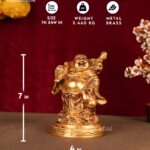

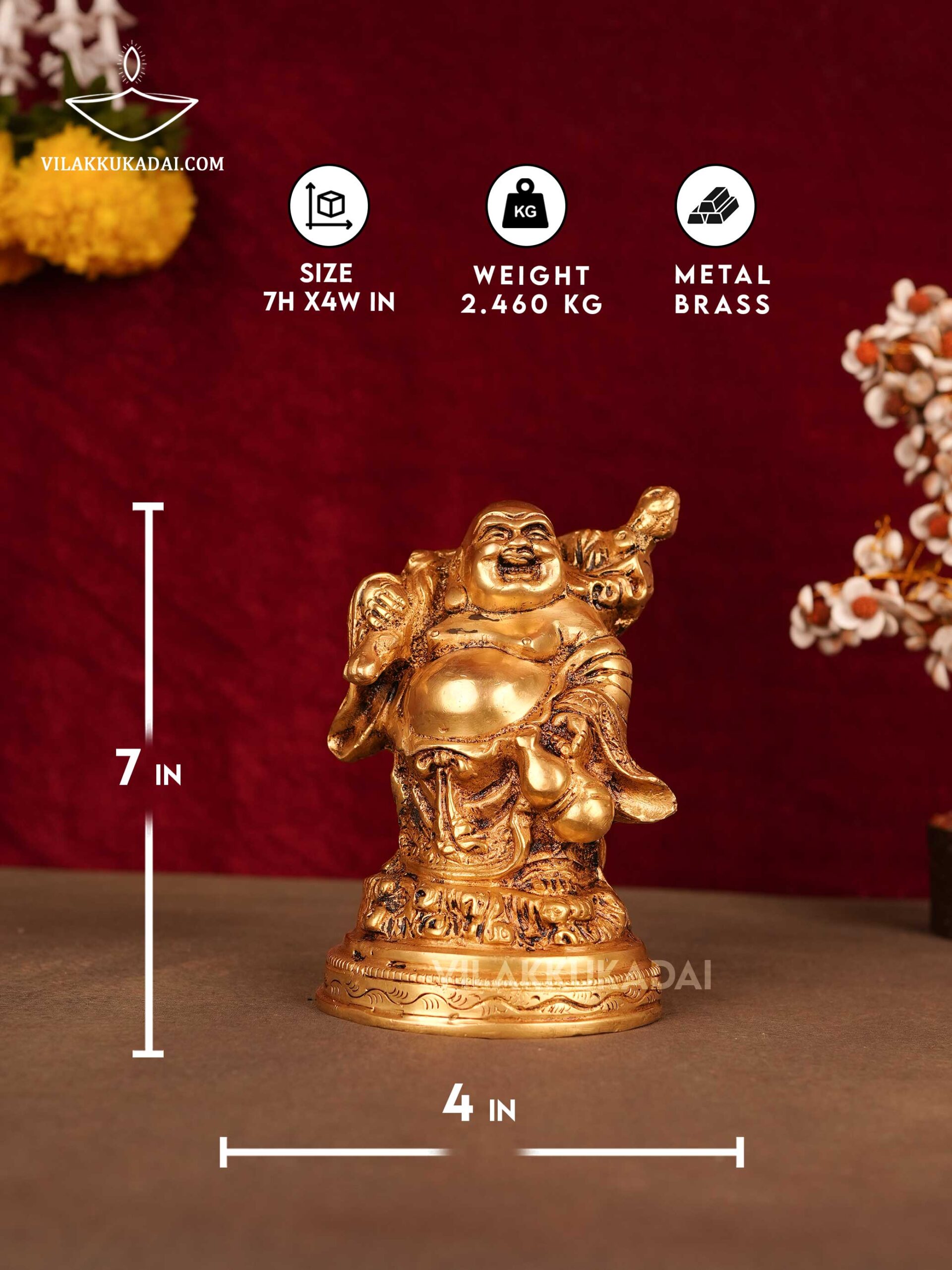
| Weight | 2 kg |
|---|---|
| Dimensions | 4.5 × 5 × 7 in |


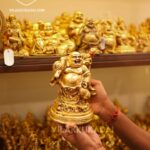
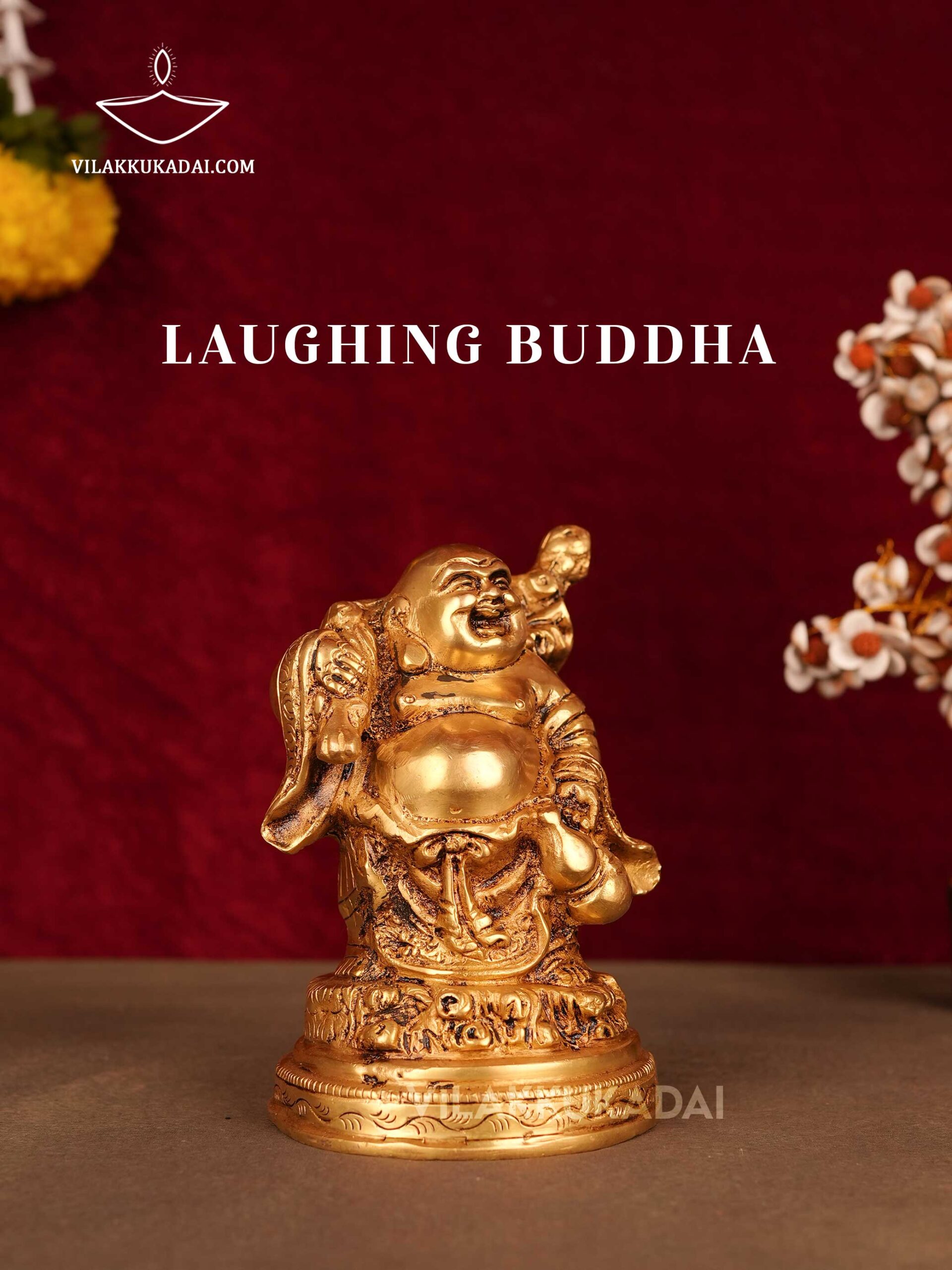
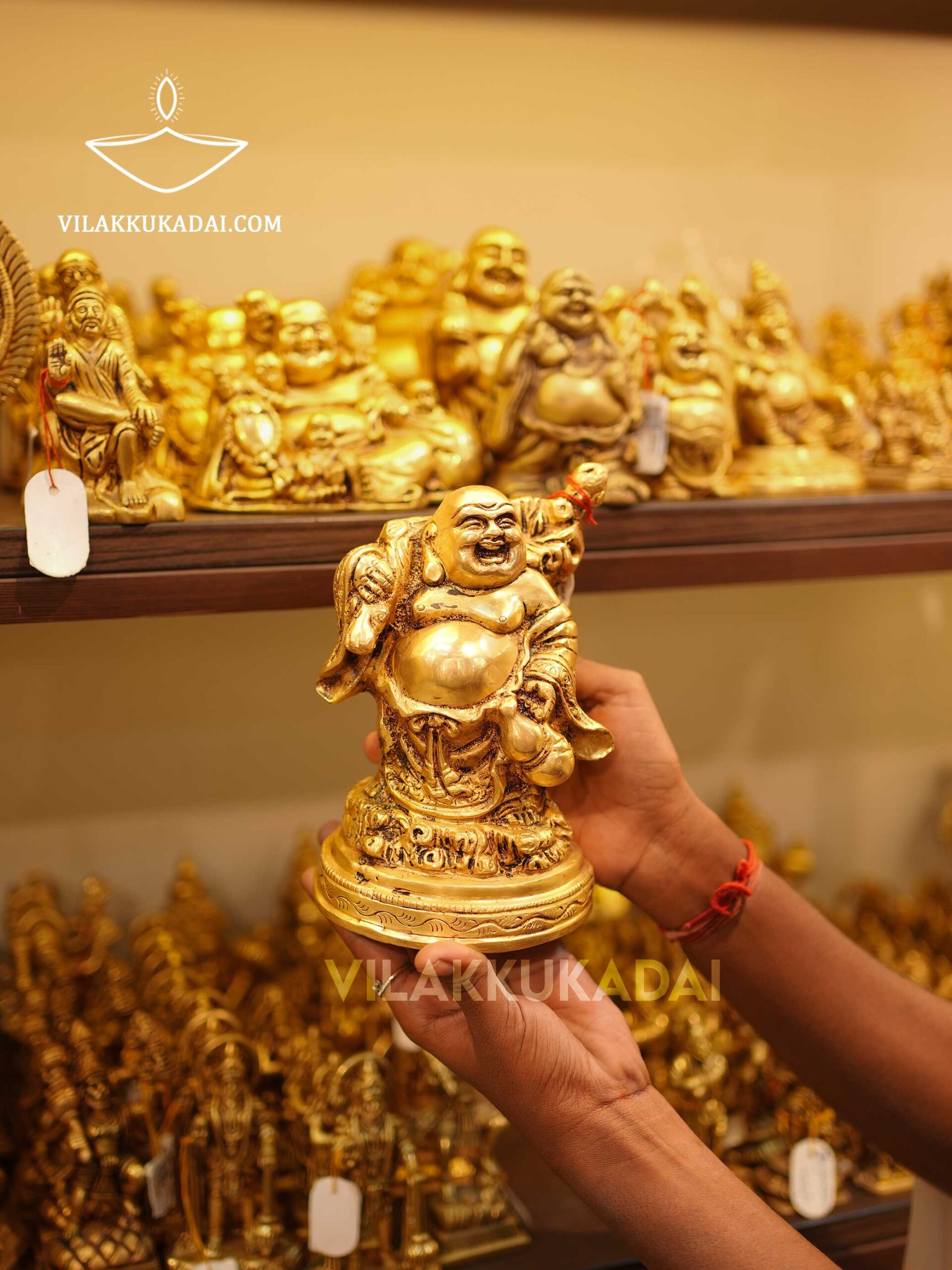
Laughing Buddha 6″/ Kubera
₹7,530 ₹8,560
Price Summary
- ₹8,560
- ₹7,530
- 12%
- ₹7,530
- Overall you save ₹1,030 (12%) on this product
Laughing Buddha – A Symbol of Happiness, Prosperity & Good Fortune
The Laughing Buddha, also known as Budai, is traditionally associated with happiness, contentment, abundance, and good fortune. His cheerful expression and joyful appearance symbolize a life filled with positivity and generosity.
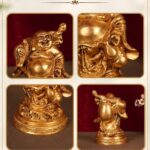
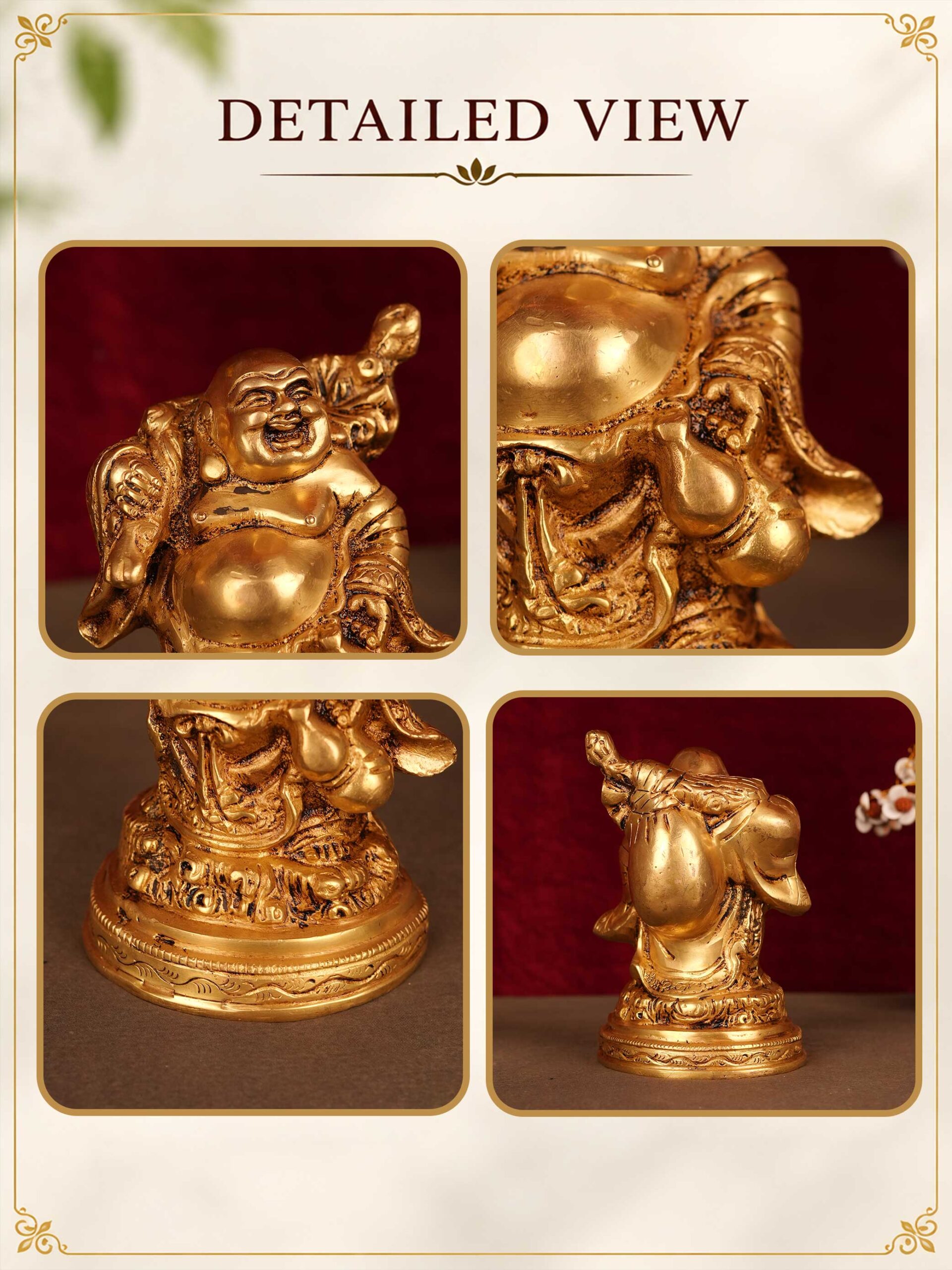
Beautifully crafted in brass, this decorative idol reflects traditional artistry and intricate craftsmanship. Its elegant appearance makes it a wonderful addition to living rooms, entrance spaces, offices, and spiritual décor collections.
The Laughing Buddha is also a popular gifting choice for housewarming ceremonies, weddings, business openings, and other special occasions, symbolizing wishes for happiness and prosperity.
Related Products
Natarajar Idol/ 10″/ Siva Natraja Murti/ Shiva Natraj Statue/ Brass Idol
Nataraja is a depiction of the Hindu god Shiva as the divine cosmic dancer. His dance is called Tandava.The pose and artwork are described in many Hindu texts such as the Tevaram, Thiruvasagam in Tamil.
He is commonly referred as Koothan( கூத்தன்), Sabesan( சபேசன்) and Ambalavanan (அம்பலவாணன்) in various Tamil texts.
The sculpture is symbolic of Shiva as the lord of dance and dramatic arts, with its style and proportions made according to Hindu texts on arts. Tamil Devotional texts such as Tirumurai (The twelve books of Southern Shaivism) speaks that Nataraja is the form of Shiva in which he does Creation, destruction, Preserving, Maya and Blessing.Thus Nataraja is considered one of the highest forms of Shiva
Kubera Panai Set/ Kubera Pot/ Brass Pot/ Kuber Pot/ Kubera Paanai/ Kuber Vessel
Kuberan is the god of wealth.
He is regarded as the regent of the north, and a protector of the world and also the owner of the treasures of the world.
He is associated with the earth, mountains, all treasures such as minerals and jewels that lie underground, and riches in general.
Vinayagar With Thiruvachi/ 3.5″/ Ganesh Murti/ Ganpati Murti/ Brass Vinayaka Idol
Ganesha, the son of Lord Shiva and Devi Parvati is popularly worshipped under different names like Sumukha, Ekadanta, Kapila, Gajakarna, Lambodara, Vikath, Vidhnanashaka, Vinayaka, Dhumraketu, Ganadhayaksha, Bhalchandra and Gajanana.
The large elephant head of Lord Ganesha symbolizes wisdom, understanding, and a discriminating intellect that one must possess to attain perfection in life.
mooshak (mouse) also symbolizes uncontrolled desires and ego that can nibble all that is good and noble in a person.
Ayyapan with Thiruvachi 11.5″
- Sabarimala Ayyappa with Thiruvachi, seated in a yoga position with
AYYAPPAN
- Ayyappan is “lord-father” or “revered father,” and he is considered the son of Vishnu and Shiva.
-
Ayyappan is a deity who is always celibate and is depicted in a yogic posture, often with a bell around his neck.
-
In Hindu mythology, Ayyappan is considered the son of Mohini (the female form of Vishnu) and Shiva.
-
Ayyappan is also known as Dharmasastha, Sastha, and Hariharasuthan, all of which have meanings related to his role as a ruler or protector. Ayyappan is often associated with the concepts of compassion, wisdom, and austerity, and he is seen as a symbol of unity among all sects of Hinduism.
Chinmuthra.
Murugan 7″
Murugar or Kandhan is the Tamil God of war and victory.
Murugar, considered as the son of Shiva and Parvathi.
Murugar is considered the God of Tamil language and he is mentioned a lot in Sangam literature.
Murugar has six shrines in Tamil Nadu, which are known as Arupadaiveedu.
The six abodes of Karthikeya are all in Tamil Nadu.
The six sites (padaiveedu) in Tamil Nadu where Murugar sojourned while leading his armies are Palani, Swamimalai, Thiruparamkundram, Pazhamudirsolai, Thiruthani and Thiruchendur, the Arupadaiveedu.
Vinayagar On Beedam/ 3.5″/ Ganpati Murti/ Vinayaka Idol/ Brass Idol/ Ganesh Murti
Ganesha, the son of Lord Shiva and Devi Parvati is popularly worshipped under different names like Sumukha, Ekadanta, Kapila, Gajakarna, Lambodara, Vikath, Vidhnanashaka, Vinayaka, Dhumraketu, Ganadhayaksha, Bhalchandra and Gajanana.
The large elephant head of Lord Ganesha symbolizes wisdom, understanding, and a discriminating intellect that one must possess to attain perfection in life.
mooshak (mouse) also symbolizes uncontrolled desires and ego that can nibble all that is good and noble in a person.
Natarajar Idol/ 22″/ Shiva Natraj Statue/ Siva Natraja Murti/ Brass Idol
Nataraja is a depiction of the Hindu god Shiva as the divine cosmic dancer. His dance is called Tandava.The pose and artwork are described in many Hindu texts such as the Tevaram, Thiruvasagam in Tamil.
He is commonly referred as Koothan( கூத்தன்), Sabesan( சபேசன்) and Ambalavanan (அம்பலவாணன்) in various Tamil texts.
The sculpture is symbolic of Shiva as the lord of dance and dramatic arts, with its style and proportions made according to Hindu texts on arts. Tamil Devotional texts such as Tirumurai (The twelve books of Southern Shaivism) speaks that Nataraja is the form of Shiva in which he does Creation, destruction, Preserving, Maya and Blessing.Thus Nataraja is considered one of the highest forms of Shiva
Natarajar Idol/ 22″/ Siva Natraja Murti/ Shiva Natraj Statue/ Brass Idol
Nataraja is a depiction of the Hindu god Shiva as the divine cosmic dancer. His dance is called Tandava.The pose and artwork are described in many Hindu texts such as the Tevaram, Thiruvasagam in Tamil.
He is commonly referred as Koothan( கூத்தன்), Sabesan( சபேசன்) and Ambalavanan (அம்பலவாணன்) in various Tamil texts.
The sculpture is symbolic of Shiva as the lord of dance and dramatic arts, with its style and proportions made according to Hindu texts on arts. Tamil Devotional texts such as Tirumurai (The twelve books of Southern Shaivism) speaks that Nataraja is the form of Shiva in which he does Creation, destruction, Preserving, Maya and Blessing.Thus Nataraja is considered one of the highest forms of Shiva
Lakshmi Kubera Vilakku/ 7.5″/ Laxmi Kuberar Deepam/ Kuber Lakshmi Lamp/ Brass Diya
Kubera can be invoked on any day but the month of Kartika is deemed special to him. Lighting the Kubera deepam in that month especially on the purnima(Full moon day) is considered very auspicious and shall surely enhance the flow of wealth in our homes and businesses.
Radha Krishna 30″ Glossy Antique
Krishna is a major deity in Hinduism. He is worshipped as the eighth avatar of Vishnu and also as the Supreme god in his own right.
He is the god of protection, compassion, tenderness, and love is one of the most popular and widely revered among Indian divinities.
Krishna’s birthday is celebrated every year by Hindus on Krishna Janmashtami according to the lunisolar Hindu calendar.
Within the Indian epic Mahabharata, Krishna was the son of the Yadava chief Vasudeva and his mother was Devaki. Hence he was known as Vāsudeva-Krishna or Vāsudeva.
Modern Crown Ganesh Murti/ 3″/ Ganpati Murti/ Vinayaka Idol/ Brass Vinayagar Idol
Ganesha, the son of Lord Shiva and Devi Parvati is popularly worshipped under different names like Sumukha, Ekadanta, Kapila, Gajakarna, Lambodara, Vikath, Vidhnanashaka, Vinayaka, Dhumraketu, Ganadhayaksha, Bhalchandra and Gajanana.
The large elephant head of Lord Ganesha symbolizes wisdom, understanding, and a discriminating intellect that one must possess to attain perfection in life.
mooshak (mouse) also symbolizes uncontrolled desires and ego that can nibble all that is good and noble in a person.
Kuberan Urli Copper/ 2.5″/ Kuber Flower Pot/ Copper Uruli/ Home Decor
- Kubera, a significant deity in Hinduism, often translated as Lord of Wealth or God of Wealth. He is also known as Kuvera or Kuberan.
- Kubera is revered as the guardian of treasures and riches, and is also the King of the Yakshas.
- Kubera is the god of wealth: He is believed to be the custodian of all earthly treasures, including precious stones and metals. He is the King of the Yakshas,Yakshas are semi-divine beings, and Kubera is their leader.
- Kubera is the guardian of the north. He is associated with prosperity.
- Kubera’s influence extends to both material wealth and spiritual abundance.