

This hand-crafted Aalamaram Wall Hanging may have slight irregularities and imperfections which only add to the unique charm of the product.
This product As crafted from brass that is considered to be a sacred metal and traditionally used in prayer accessories
Aalamaram Wall Hanging/ 8″/ Banyan Tree Wall Hanger/ Brass Wall Decoration
₹2,250 ₹2,590
Price Summary
- ₹2,590
- ₹2,250
- 13%
- ₹2,250
- Overall you save ₹340 (13%) on this product
SHIPPING INFO:
Dispatched in a maximum of 15-30 business days. This item is not eligible for return. Cancellation requests will be accepted strictly within 24 hours of placing the order only. This product is made on order.
We also ship worldwide. International shipping charges are calculated at checkout.
| Weight | 0.880 kg |
|---|---|
| Dimensions | 1 × 7.5 × 8 in |
You May Also Like
PERUMAL WALL HANGING (BALAJI)
Highlights:
- This hand-crafted piece may have slight irregularities and imperfections which only add to the unique charm of the product.
- This product is crafted from brass that is considered to be a sacred metal and traditionally used in prayer accessories.
SHIPPING INFO
Dispatched in a maximum of 7 business days. This item is not eligible for return. Cancellation requests will be accepted strictly within 24 hours of placing the order only. This product is made on order
We also ship worldwide. International shipping charges are calculated at checkout.
Vinayagar Face Vilakku Wallhanging
Ganesha, the son of Lord Shiva and Devi Parvati is popularly worshipped under different names like Sumukha, Ekadanta, Kapila, Gajakarna, Lambodara, Vikath, Vidhnanashaka, Vinayaka, Dhumraketu, Ganadhayaksha, Bhalchandra and Gajanana.
The large elephant head of Lord Ganesha symbolizes wisdom, understanding, and a discriminating intellect that one must possess to attain perfection in life.
mooshak (mouse) also symbolizes uncontrolled desires and ego that can nibble all that is good and noble in a person.
GANESH HEAD WALL HANGING
Ganesha, the son of Lord Shiva and Devi Parvati is popularly worshipped under different names like Sumukha, Ekadanta, Kapila, Gajakarna, Lambodara, Vikath, Vidhnanashaka, Vinayaka, Dhumraketu, Ganadhayaksha, Bhalchandra and Gajanana.
The large elephant head of Lord Ganesha symbolizes wisdom, understanding, and a discriminating intellect that one must possess to attain perfection in life.
mooshak (mouse) also symbolizes uncontrolled desires and ego that can nibble all that is good and noble in a person.
Panchamuga Hanuman Wall hanging
Panchamuga Hanuman Wall Hanging – Symbol of Strength and Protection
Invoke divine protection with this beautifully crafted Panchamuga Hanuman Wall Hanging, featuring the sacred five-faced form of Hanuman. Each face represents powerful spiritual energies that are believed to remove negative influences, protect the home, and bring courage, wisdom, and prosperity.
Designed with intricate detailing and a traditional finish, this sacred wall décor is ideal for home entrances, pooja rooms, offices, and spiritual spaces. The Panchamuga Hanuman form is revered for shielding devotees from obstacles while promoting peace and positivity.
Hindi Om Wall Hanging/ 6″/ Wall Hanger/ Brass Wall Decoration/ Home Decor
Swastik Wall Hanging
PERUMAL WALL HANGING (BALAJI)
Vishnu, also known as Narayana and Hari, is one of the principal deities of Hinduism. He is the supreme being within Vaishnavism, one of the major traditions within contemporary Hinduism.
Vishnu is known as “The Preserver” within the Trimurti, the triple deity of supreme divinity that includes Brahma and Shiva. In Vaishnavism, Vishnu is the supreme being who creates, protects, and transforms the universe.
Whenever the world is threatened with evil, chaos, and destructive forces, Vishnu descends in the form of an avatar (incarnation) to restore the cosmic order, and protect dharma.
Lakshmi On Lotus Wall Hanging/ 19″/ Laxmi Wall Hanger/ Brass Wall Decoration
Lakshmi is one of the principal goddesses in Hinduism. She is the goddess of wealth, fortune, power, beauty, fertility and prosperity, and associated with Maya (“Illusion”). Along with Parvati and Saraswati, she forms the Tridevi of Hindu goddesses.
Lakshmi is venerated as the prosperity aspect of the Mother goddess.
Lakshmi is both the consort and the divine energy (shakti) of the Hindu god Vishnu, the Supreme Being of Vaishnavism; she is also the Supreme Goddess in the sect and assists Vishnu to create, protect, and transform the universe.
VINAYAGAR WALL HANGING
Ganesha, the son of Lord Shiva and Devi Parvati is popularly worshipped under different names like Sumukha, Ekadanta, Kapila, Gajakarna, Lambodara, Vikath, Vidhnanashaka, Vinayaka, Dhumraketu, Ganadhayaksha, Bhalchandra and Gajanana.
The large elephant head of Lord Ganesha symbolizes wisdom, understanding, and a discriminating intellect that one must possess to attain perfection in life.
mooshak (mouse) also symbolizes uncontrolled desires and ego that can nibble all that is good and noble in a person.
SWASTHIK VINAYAGAR WALL HANGING
Ganesha, the son of Lord Shiva and Devi Parvati is popularly worshipped under different names like Sumukha, Ekadanta, Kapila, Gajakarna, Lambodara, Vikath, Vidhnanashaka, Vinayaka, Dhumraketu, Ganadhayaksha, Bhalchandra and Gajanana.
The large elephant head of Lord Ganesha symbolizes wisdom, understanding, and a discriminating intellect that one must possess to attain perfection in life.
mooshak (mouse) also symbolizes uncontrolled desires and ego that can nibble all that is good and noble in a person.
ANTIQUE KALASAM WALL HANGING
Kalasham Wall Hanging
VINAYAGAR WALL HANGING.
Ganesha, the son of Lord Shiva and Devi Parvati is popularly worshipped under different names like Sumukha, Ekadanta, Kapila, Gajakarna, Lambodara, Vikath, Vidhnanashaka, Vinayaka, Dhumraketu, Ganadhayaksha, Bhalchandra and Gajanana.
The large elephant head of Lord Ganesha symbolizes wisdom, understanding, and a discriminating intellect that one must possess to attain perfection in life.
mooshak (mouse) also symbolizes uncontrolled desires and ego that can nibble all that is good and noble in a person.
Elephant Face With Bell Wall Hanging/ 14″/ Brass Wall Hanger/ Wall Decoration
Elephant Face with Bell – Auspicious Wall Decor for Good Fortune
Recently Viewed
Brass Nandhi Statue/ 10″/ Nandi Statue/ Nandi Bull Idol/ Brass Idol/ Pooja Decor
Brass Nandhi Idol
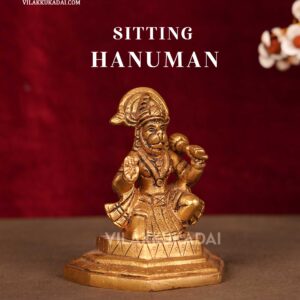
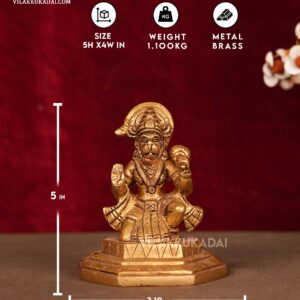
Hanuman Statue/ 4.5″/ Anjaneya Idol/ Brass Idol/ Bajrang Bali Murti/ Puja Mandir
- “Hanuman” translates to “one with a prominent jaw“ or “one with a disfigured jaw.” It is the name of a monkey god in Hindu mythology, known for his devotion to Lord Rama and his powerful attributes.
- The name “Hanuman” derives from the Sanskrit word “hanu,” meaning “jaw,” and “man,” meaning “prominent” or “disfigured”.
- A popular legend suggests Hanuman received his name after being struck in the jaw by Indra, the king of the gods, for attempting to reach the sun, which he mistook for a fruit.
- Hanuman is a prominent figure in the Ramayana, the Hindu epic, where he aids Rama in rescuing his wife Sita from the king Ravana. He is revered for his unwavering devotion, strength, courage, and selfless service. He is also known by names like Maruti (childhood name), Anjaneya, and Bajrangbali.
Kalasam 5″
Kalasam
Varahar Lakshmi Copper/ 5.5″/ Lakshmi Varahar/ Laxmi Varaha
Vishnu, also known as Narayana and Hari, is one of the principal deities of Hinduism. He is the supreme being within Vaishnavism, one of the major traditions within contemporary Hinduism.
Vishnu is known as “The Preserver” within the Trimurti, the triple deity of supreme divinity that includes Brahma and Shiva. In Vaishnavism, Vishnu is the supreme being who creates, protects, and transforms the universe.
Whenever the world is threatened with evil, chaos, and destructive forces, Vishnu descends in the form of an avatar (incarnation) to restore the cosmic order, and protect dharma.
Nandhi Statue/ 4.5″/ Brass Idol/ Nandi Statue/ Nandi Bull Idol/ Pooja Decor
Nandhi
Varahar Copper/ 2.5″/ Varaha Swamy/ Copper Idol/ Pooja Decor
Varaha, (Sanskrit: “Boar”) third of the 10 incarnations (avatars) of the Hindu god Vishnu. When a demon named Hiranyaksha dragged the earth to the bottom of the sea, Vishnu took the form of a boar in order to rescue it. They fought for a thousand years. Then Varaha slew the demon and raised the earth out of the water with his tusks. The myth reflects an earlier creation legend of Prajapati (Brahma), who assumed the shape of a boar in order to lift the earth up out of the primeval waters.
Nandhi Statue/ 5″/ Nandi Statue/ Nandi Bull Idol/ Brass Idol
Nandhi
Shiva Head/ 12″/ Shiv Murti/ Siva/ Brass Idol/ Shiva Face
The Hindu God Shiva was originally known as Rudra, a minor deity addressed only three times in the Rig Veda. Shiva is known as “The Destroyer” within the Trimurti, the Hindu trinity which also includes Brahma and Vishnu. In the Shaivite tradition, Shiva is the Supreme Lord who creates, protects and transforms the universe.
Shiva is known by many names such as Viswanatha (lord of the universe), Mahadeva, Mahandeo, Mahasu, Mahesha, Maheshvara, Shankara, Shambhu, Rudra, Hara, Trilochana, Devendra (chief of the gods), Neelakanta, Subhankara, Trilokinatha (lord of the three realms), and Ghrneshwar (lord of compassion).
Kamadhenu Cow With Karpaga Virutcham/ 7.5″/ Brass Kamadenu Cow Karpaga Viruksham
“Kamadhenu was a miraculous cow of plenty who could give her owner whatever he desired. She was sometimes said to be the daughter of Daksha, and the wife of the rishi Kasyapa.
Kamadhenu appeared on earth as one of the precious things that were brought to light in the Churning of the Ocean.
5 Face Ruthratcham Bead Plain/ 3″/ 5 Face Rudraksha Bead/ 5 Face Rudra Bead
RUDRAKSHAM
- Rudraksha, is a sacred bead with five natural lines or faces on its surface. It’s one of the most common types and is deeply associated with Lord Shiva in his form of Rudra Kalagni, the destroyer of sin and evil. The bead also symbolizes the five elements of nature: earth, water, fire, air, and ether.
- Rudraksha refers to a stonefruit, the dried stones of which are used as prayer beads by Hindus (especially Shaivas), as well as by Buddhists and Sikhs. When they are ripe, rudraksha stones are covered by an inedible blue outer fruit so they are sometimes called “blueberry beads”.
- Chanting the Shivashtakam is believed to bring abundance, healing, and improved decision-making. Regular chanting can also lead to mental clarity, emotional balance, and spiritual growth, enhancing inner peace and a deeper connection with Shiva. Some believe it can even remove negative energies and help overcome past sins.